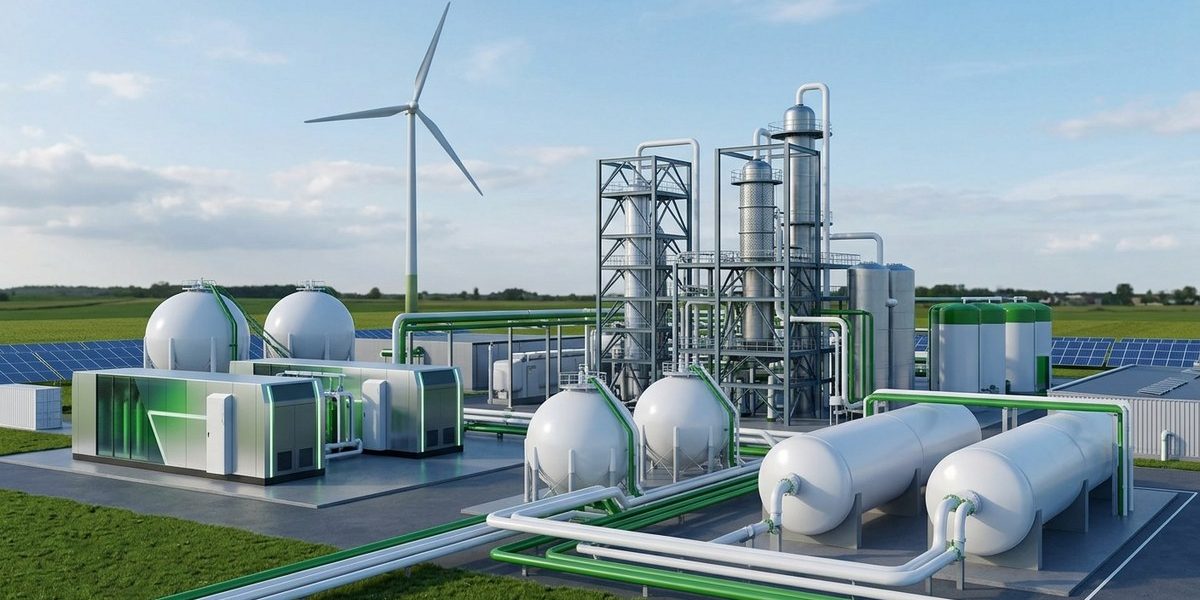
Denmark has a reputation for cycling further than most on a gust of wind, and that reputation is now being tested in a new arena: green hydrogen storage. The core problem is familiar to anyone in the sector. Wind and solar power are intermittent, but industry needs a steady, reliable supply of hydrogen. You cannot just bottle it and forget it. Storage is a physical and economic headache. Yet a cluster of Danish methanation projects are quietly turning that headache into a solution, and they are doing it right now in 2026.
Danish methanation projects are solving green hydrogen storage challenges by converting surplus renewable energy into pipeline-ready methane. This approach uses existing gas infrastructure, avoids costly new storage caverns, and provides a stable, storable fuel that can be used for power, heat, or industry. For energy professionals, this is a practical, scalable model for 2026 and beyond.
Why methanation matters more than you think
Hydrogen is light, energetic, and notoriously hard to contain. Compressing it to 700 bar or chilling it to minus 253 degrees Celsius eats up a lot of energy. Even then, you need specialised tanks or salt caverns. Denmark has limited salt cavern capacity, and building new ones takes years and a lot of money.
Methanation offers a different path. Instead of storing hydrogen directly, you react it with carbon dioxide to produce methane. Methane is the main component of natural gas. That means you can inject it straight into the existing gas grid, store it in the same underground facilities that already hold Danish natural gas, and burn it in conventional gas turbines or boilers. The carbon dioxide is not lost either. If you capture it from a biogas plant or a industrial process, the whole cycle can be carbon neutral.
For a country like Denmark, which already has a well developed gas grid and a strong biogas sector, methanation is a natural fit. It solves the storage problem without requiring a complete infrastructure rebuild.
How a Danish methanation project works in practice
Let us walk through a typical project. It is not as complicated as it sounds.
-
Produce green hydrogen using an electrolyser powered by wind or solar. The electrolyser splits water into hydrogen and oxygen. This step is identical to any other green hydrogen project.
-
Capture a carbon source. The most common source in Denmark is biogas. Biogas contains roughly 40 percent carbon dioxide. Instead of venting that CO2 into the air, you separate it and pipe it to the methanation unit.
-
Feed both gases into a methanation reactor. Inside the reactor, a catalyst (usually nickel based) encourages the hydrogen and carbon dioxide to react. The chemical equation is straightforward: CO2 plus 4 H2 produces CH4 plus 2 H2O. The output is a gas that is about 95 percent methane, with a small amount of residual hydrogen and CO2.
-
Upgrade and inject. The raw methane is cleaned up to meet grid specifications. Then it is injected into the existing natural gas network. From there, it can be stored in underground reservoirs or used immediately.
-
Use the methane when needed. When the wind drops or demand spikes, the stored methane is withdrawn from the grid and burned in a power plant or used for industrial heat. The carbon dioxide released is theoretically the same CO2 that was captured earlier, so the net emission is zero.
This process is already running at commercial scale in several Danish locations. The key advantage is that it decouples hydrogen production from hydrogen demand. You can make hydrogen when electricity is cheap and abundant, convert it to methane, and store that methane for weeks or months.
The projects leading the way in 2026
A few names keep coming up in conversations with Danish energy professionals.
The HySynergy project in Fredericia is one of the largest. It combines a 20 MW electrolyser with a biogas upgrading facility and a methanation unit. The plant started its initial operations in 2025 and reached full capacity in early 2026. It feeds methane directly into the Danish gas grid, which connects to the wider European network. The project is a joint venture between Everfuel and a group of industrial partners.
Another notable example is the GreenLab facility in Skive. GreenLab is an industrial symbiosis park where multiple companies share energy and waste streams. Their methanation unit uses CO2 from a neighbouring biogas plant and hydrogen from an on site electrolyser. The methane is used both for on site power generation and for injection into the grid. It is a textbook example of circular economy thinking.
Then there is the project at the Avedoere Power Station near Copenhagen. This is a retrofit of an existing combined heat and power plant. The plant now includes a methanation unit that converts surplus wind power into methane during periods of low demand. The stored methane is then burned to produce heat and electricity when demand rises. It is a practical demonstration of how existing fossil fuel infrastructure can be repurposed for a renewable future.
If you want a deeper look at the electrolyser side of these projects, our article on maximizing green hydrogen production with Danish electrolyser technologies covers the latest hardware developments.
Comparing methanation with other storage methods
No single storage technology is perfect. Here is a quick comparison to show where methanation fits.
| Storage method | Energy density | Round trip efficiency | Infrastructure cost | Best use case |
|---|---|---|---|---|
| Compressed hydrogen (700 bar) | Medium | 55 to 65 percent | High (new tanks and compressors) | Short term, small scale |
| Liquid hydrogen | High | 45 to 55 percent | Very high (cryogenic equipment) | Transport, aviation |
| Salt cavern hydrogen | High | 70 to 80 percent | Medium (if cavern exists) | Large scale, seasonal |
| Methanation (power to gas) | Very high (uses gas grid) | 35 to 45 percent | Low (uses existing grid) | Seasonal storage, grid balancing |
Methanation has the lowest round trip efficiency, but that is misleading. The efficiency loss is the cost of making the gas storable and transportable. For seasonal storage, where you might store energy for six months, the losses from a battery or compressed hydrogen system can be even higher because of self discharge and leakage. Methane does not leak or degrade over time if stored properly.
The real winner is infrastructure cost. Denmark already has thousands of kilometres of gas pipes and several underground storage facilities. Using them for renewable methane avoids building a parallel hydrogen network from scratch. That is a huge financial advantage.
Common mistakes to avoid in methanation projects
Even the best technology can fail if the system design is wrong. Here are some pitfalls that Danish projects have encountered and solved.
-
Ignoring the carbon source quality. Not all CO2 is the same. Biogas contains trace contaminants like hydrogen sulphide and siloxanes. If you do not clean the gas properly before methanation, your catalyst will degrade quickly. Danish projects use a two stage cleaning process: first an amine scrubber, then a polishing filter.
-
Mismatching hydrogen production and CO2 availability. A methanation reactor needs a steady ratio of hydrogen to CO2. If your electrolyser ramps up and down with wind power, but your CO2 supply is constant, you will have periods where one gas is in excess. The solution is to add a small hydrogen buffer tank between the electrolyser and the reactor. This smooths out the fluctuations.
-
Underestimating the heat management challenge. Methanation is exothermic. It releases a lot of heat. If you do not capture and use that heat, you waste a valuable resource. Several Danish projects use the waste heat for district heating networks or for drying biogas digestate.
-
Assuming the gas grid will accept any methane. Grid operators have strict specifications for gas quality. You need to monitor the methane content, the calorific value, and the Wobbe index. A good quality control system is essential.
For a broader look at how these systems fit into the national picture, see our piece on integrating power-to-gas systems for sustainable Danish industry.
The economic case in 2026
The economics of methanation have shifted noticeably in the last two years. Electrolyser costs have fallen by about 30 percent since 2024. Carbon pricing in the EU has risen above 100 euros per tonne. And the Danish government has introduced a premium tariff for green gases injected into the grid.
A typical 10 MW methanation plant in Denmark can now produce methane at a cost of roughly 80 to 100 euros per megawatt hour. That is competitive with imported natural gas when carbon costs are included. The breakeven point is expected to drop further as electrolyser efficiency improves and biogas capture technology becomes cheaper.
Investors should also consider the value of flexibility. A methanation plant can act as a demand side response asset. When electricity prices are negative (which happens frequently during stormy Danish weekends), the plant can ramp up hydrogen production and effectively get paid to absorb power. That revenue stream can improve the overall project economics significantly.
“Methanation is not about efficiency. It is about system integration. You lose some energy in the conversion, but you gain the ability to use the entire existing gas infrastructure. That trade off is worth it.”
Senior engineer at a Danish energy utility, speaking at a 2026 industry conference.
What this means for the UK energy sector
There are direct lessons here for UK energy professionals. The UK has a similar gas grid, a growing biogas sector, and a need for long duration storage. Danish methanation projects show that the technology is mature enough for commercial deployment.
The UK also has salt caverns, but they are concentrated in a few locations. Methanation could complement cavern storage by providing distributed storage capacity across the gas network. That would reduce the need for new hydrogen pipelines and make the whole system more resilient.
If you are evaluating a power to gas project in the UK, look at the Danish model closely. The regulatory framework, the grid connection standards, and the business models are well documented. Several Danish companies are already offering turnkey methanation units for export.
For a UK specific perspective, read our article on what can the UK learn from Denmark’s green hydrogen pioneers.
Key metrics to track for a methanation project
If you are planning or evaluating a project, keep an eye on these numbers.
- Methane yield: The percentage of hydrogen converted to methane. Targets are above 90 percent.
- Catalyst lifetime: Nickel catalysts typically last 8,000 to 12,000 operating hours. Longer lifetimes reduce operating costs.
- CO2 conversion rate: The fraction of CO2 that is converted to methane. Above 95 percent is achievable.
- Grid injection compliance: The percentage of time the output gas meets grid specifications. Aim for 99 percent or higher.
- Heat recovery rate: The proportion of exothermic heat that is captured and used. Best in class is above 80 percent.
These metrics are the difference between a pilot project and a commercial success. They are also the numbers that investors and grid operators will ask about first.
The road ahead for Danish methanation
Denmark has set a target of 2 GW of electrolyser capacity by 2030. A significant portion of that hydrogen will go through methanation. The current pipeline of projects suggests that installed methanation capacity will reach 500 MW by 2028. That is enough to supply roughly 5 percent of Danish gas demand.
The next step is to integrate methanation with industrial carbon capture. Several projects are looking at using CO2 from cement plants and steel mills. That would turn hard to abate industrial sectors into net producers of green methane. The technology is already proven at pilot scale. The challenge now is scaling up and driving down costs.
For energy sector professionals and investors, the message is clear. Danish methanation projects are not theoretical. They are running, they are profitable, and they are solving the storage problem that has held back green hydrogen for years. The same approach can work in the UK, in Germany, and beyond.
If you want to understand the full picture, start with our guide on why green hydrogen storage is Denmark’s next big challenge. Then look at the methanation projects themselves. The technology is ready. The infrastructure is in place. The only question is how fast we can build.
Methanation is the missing piece of the puzzle
Green hydrogen has always had a storage problem. Methanation does not eliminate the problem, but it makes it manageable. By using the existing gas grid as a giant battery, Danish projects have found a way to store renewable energy for months at a time, at a fraction of the cost of building new hydrogen infrastructure.
That is not just a technical achievement. It is a practical, bankable solution that can be replicated in any country with a gas network. For anyone working in the energy transition, it is worth paying attention to what Denmark is doing right now in 2026. The projects are live. The data is public. And the lessons are ready to be applied.