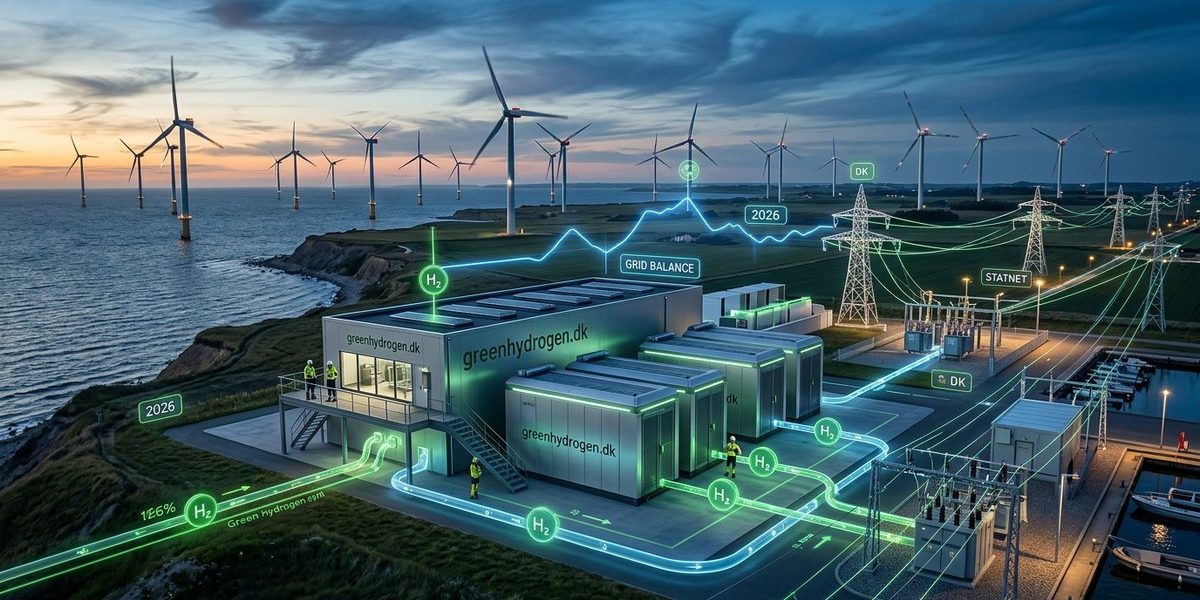
Denmark’s wind turbines produce a lot of power. Sometimes they produce too much. On a blustery Tuesday night in the North Sea, the grid can become unstable. Traditionally, grid operators had to switch off turbines or pay neighbouring countries to take the excess. That is changing in 2026. Danish electrolysers are now acting as a flexible, fast-responding buffer for the national grid. They turn surplus electricity into green hydrogen, and they can ramp up or down in seconds. For energy policy analysts, grid operators, and investors in Northern Europe, this is a practical solution to a costly problem.
Danish electrolysers are not just hydrogen factories. In 2026, they are critical grid assets that absorb excess wind power, provide fast frequency response, and reduce curtailment. For grid operators and investors, this dual role offers a clear path to stabilising the national grid while producing a valuable green fuel.
The Grid Balancing Challenge
Denmark’s electricity grid is one of the most renewable in Europe. Wind power often supplies more than 50% of total demand. On a stormy day, that share can exceed 100%. When supply outstrips demand, the grid frequency rises above 50 Hz. That is dangerous. Equipment can be damaged. Blackouts can occur.
The old solution was to curtail wind farms. That means paying operators to stop producing. It is expensive and wasteful. In 2025, Danish grid operators spent millions on curtailment payments. For 2026, the strategy is different. Electrolysers are now part of the balancing toolkit.
How Electrolysers Absorb Excess Power
An electrolyser splits water into hydrogen and oxygen using electricity. It is a large, industrial appliance. But it is also a flexible load. Unlike a steel plant or a data centre, an electrolyser can change its power consumption almost instantly.
Here is how it works in practice:
- Frequency monitoring. The grid operator detects a frequency rise above 50 Hz. This signals excess generation.
- Signal sent to electrolyser. A control system sends a ramp-up command to the electrolyser fleet. This happens in under one second.
- Load increase. The electrolysers increase their power draw. They absorb the surplus electricity and produce hydrogen.
- Frequency stabilises. The grid frequency returns to normal. The hydrogen is stored or fed into the gas network.
This process is called demand-side response. Electrolysers act like a giant, adjustable sponge for electricity.
Technical Capabilities in 2026
Danish electrolyser technology has improved significantly. The latest proton exchange membrane (PEM) units can ramp from 10% to 100% load in less than five seconds. Alkaline units are slower but still respond within 30 seconds. Both types are now used in grid balancing.
Here is a comparison of the main technologies deployed in Denmark for grid services in 2026:
| Technology | Ramp time (10% to 100%) | Minimum load | Best use case |
|---|---|---|---|
| PEM | Under 5 seconds | 10% | Fast frequency response, seconds market |
| Alkaline | 20-30 seconds | 20% | Tertiary reserve, longer balancing periods |
| Solid oxide | Under 2 seconds | 5% | Experimental, high efficiency at high temperature |
PEM electrolysers are the preferred choice for the fastest balancing services. They are installed at several Danish wind farms and at the HySynergy plant in Fredericia.
The Economic Case
Grid operators pay for flexibility. In 2026, the Danish balancing market offers several revenue streams for electrolyser operators. These include:
- Frequency containment reserve (FCR). Payment for holding capacity ready to respond within seconds.
- Automatic frequency restoration reserve (aFRR). Payment for automated response within a few minutes.
- Manual frequency restoration reserve (mFRR). Payment for scheduled balancing.
A 10 MW electrolyser can earn significant revenue from these markets. Combined with the sale of green hydrogen, the economics are becoming attractive. For investors, the key is to size the electrolyser correctly and secure a contract with the grid operator.
“We are seeing electrolyser projects that earn more than half their revenue from grid services. That changes the investment case completely. The hydrogen is the bonus, not the burden.” — Lars Jensen, energy markets analyst at Green Hydrogen Denmark.
Practical Steps for Grid Operators
If you are a grid operator or energy policy analyst, here is how to integrate electrolysers into your balancing strategy:
- Assess your frequency deviation patterns. Look at historical data for excess wind events.
- Identify suitable locations. Electrolysers should be near wind farms or grid connection points with high congestion.
- Specify ramp rate requirements. For fast response, choose PEM. For slower balancing, alkaline is cheaper.
- Establish communication protocols. Use standard signals like IEC 61850 or OpenADR.
- Test the system. Run simulations and real-world ramp tests before going live.
Common Mistakes to Avoid
Even the best technology fails if the implementation is poor. Here are the most frequent errors in Danish electrolyser grid balancing projects:
- Sizing the electrolyser for hydrogen production only. You need extra capacity for balancing.
- Ignoring minimum load constraints. If your electrolyser cannot run below 20%, you lose flexibility.
- Poor siting. If the electrolyser is far from the grid bottleneck, the benefit is reduced.
- Neglecting hydrogen storage. Without storage, you cannot decouple production from demand.
- Underestimating maintenance. Electrolysers need regular stack replacement. Budget for it.
The Role of Hydrogen Storage
Electrolysers produce hydrogen. That hydrogen must go somewhere. In Denmark, the gas network is being adapted to accept hydrogen blends. Dedicated salt cavern storage is also under development. For 2026, most projects use pressurised tanks. This allows the hydrogen to be sold later for industry, transport, or heating.
Hydrogen storage is the enabler. Without it, the electrolyser can only run when the grid needs balancing. With storage, the operator can produce hydrogen during low-price periods and sell it during high-price periods. This improves the business case.
Innovations Driving 2026 Deployment
Danish companies are leading several innovations that make grid balancing with electrolysers more effective:
- Digital twins. Operators use a virtual model of the electrolyser to predict performance and optimise bids. This is covered in more detail in our article on how digital twins are optimising Danish green hydrogen production efficiency.
- Hybrid systems. Combining PEM and alkaline units in one plant to get fast response and low cost.
- Direct wind coupling. Connecting electrolysers directly to wind turbines without going through the grid. This reduces losses and congestion.
- Smart control algorithms. Machine learning predicts wind output and pre-positions the electrolyser load.
These innovations are not theoretical. They are being deployed at sites in Jutland and on the island of Bornholm.
A Real World Example
Consider the port of Esbjerg. It is a hub for offshore wind. In 2026, a 50 MW electrolyser plant operates there. It is connected directly to the local wind farm and to the national grid. When the wind blows hard, the electrolyser ramps up. It absorbs power that would otherwise be curtailed. The hydrogen is used to fuel trucks and ships at the port. The plant earns revenue from both the balancing market and hydrogen sales.
This model is being replicated in other Danish ports and industrial zones. It shows how electrolysers can serve two masters: the grid and the hydrogen economy.
Why This Matters for Northern Europe
Denmark is not alone. Germany, the Netherlands, and the UK face similar grid challenges. The Danish approach offers a template. By 2026, the Danish system is mature enough to export. Grid operators in Schleswig-Holstein and Scotland are studying the Danish model.
For investors, the message is clear. Electrolysers are not a speculative technology. They are a proven grid asset. The returns are real. The risks are manageable.
If you are considering an investment, start with a feasibility study. Look at your local grid conditions. Talk to the transmission system operator. Model the revenue from balancing services. Then size your electrolyser accordingly. For more guidance, see our practical guide to sizing electrolysers for Danish offshore wind farms.
What the Future Holds
By 2027, Denmark plans to have over 1 GW of electrolyser capacity connected to the grid. That is enough to absorb the output of a large offshore wind farm. The balancing market will grow. Hydrogen storage will expand. Cross-border hydrogen trade will begin.
For now, 2026 is the year when electrolysers become a standard tool for grid operators. The technology works. The economics work. The policy framework is in place.
Making Electrolysers Part of Your Grid Strategy
If you are a grid operator, now is the time to act. Start by mapping your frequency deviations. Identify the best locations for electrolysers. Talk to technology providers. Run pilot projects. The Danish experience shows that electrolysers can balance the grid reliably and profitably.
If you are an investor, look for projects that combine grid services with hydrogen offtake. That dual revenue stream is the key to a strong return. Avoid projects that rely on hydrogen sales alone. They are riskier.
If you are a policy analyst, study the Danish market design. The balancing market rules are critical. They determine whether electrolysers can participate. Good rules attract investment. Bad rules kill projects.
Denmark has shown the way. The rest of Northern Europe can follow. The technology is ready. The market is ready. The only missing piece is action.
A Final Word on the Danish Electrolyser Advantage
Danish electrolysers are critical for balancing the national grid in 2026 because they solve a real, costly problem. They turn excess wind power into a valuable fuel. They provide fast, flexible response. They reduce curtailment. They support the grid. They create revenue.
For anyone working in energy policy, grid operations, or renewable investment, this is not a niche topic. It is a central part of the energy transition. The Danish example is practical, proven, and ready to scale.
If you want to learn more about how these systems are designed and operated, read our article on maximizing green hydrogen production with Danish electrolyser technologies. It covers the engineering details that make grid balancing possible. And if you are curious about the broader infrastructure, exploring Denmark’s role in advancing green hydrogen infrastructure by 2026 gives you the full picture.
The wind is not going to stop blowing. The grid will keep needing balance. Danish electrolysers are ready to provide it.