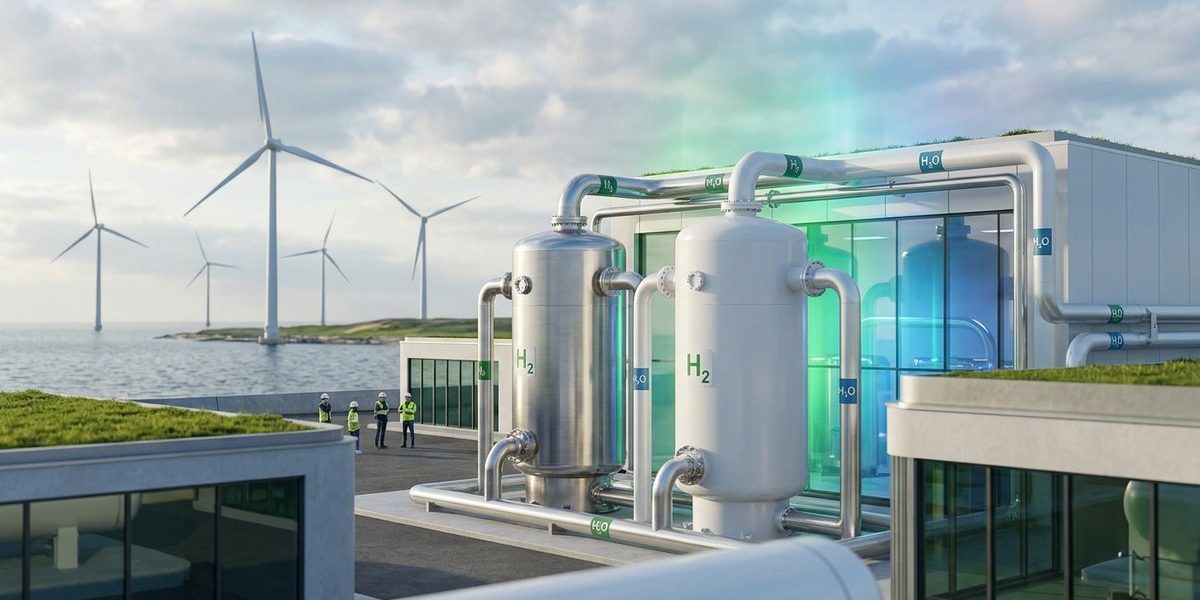
Denmark has set some of the boldest green hydrogen targets in Europe. By 2026, the country aims to have at least 1 GW of electrolyser capacity installed and producing clean hydrogen from renewable electricity. That is a massive leap from the handful of pilot projects running today. The question is not whether Denmark has the ambition, but whether the technology, infrastructure, and investment can line up in time. Let’s break down the numbers, the machines, and the real world constraints.
Denmark can realistically achieve its 2026 green hydrogen targets if electrolyser deployment accelerates at the current pace and grid integration improves. The country’s strong wind resources and existing hydrogen infrastructure provide a solid foundation. However, the biggest hurdles are high electricity costs, supply chain bottlenecks, and the need for large scale storage. Policy certainty and continued funding are essential.
The 2026 target landscape
Denmark’s official hydrogen strategy, updated in late 2025, calls for 1 GW of electrolyser capacity by the end of 2026. This sits within the broader goal of making the country a net exporter of green hydrogen to neighbouring Germany and the Netherlands. The targets are driven by the need to decarbonise heavy industry, shipping, and parts of the transport sector.
A 2026 deadline is tight. Most large scale electrolyser projects take two to three years from final investment decision to commercial operation. Given that many of the flagship projects were announced in 2024 and 2025, the window for execution is narrow. The good news is that Denmark is not starting from scratch.
For a deeper look at how these targets fit into the wider energy system, see our guide on integrating power-to-gas systems for sustainable Danish industry.
Electrolyser technologies at the heart of the strategy
Denmark is betting on a mix of electrolyser types. Each has strengths and weaknesses.
| Technology | Efficiency (LHV) | Typical stack lifetime | Best use case | Main drawback |
|---|---|---|---|---|
| PEM (Proton Exchange Membrane) | 60-70% | 50,000-70,000 hours | Dynamic operation with renewables | Higher cost per kW |
| Alkaline (AEL) | 63-70% | 60,000-90,000 hours | Steady base load | Slower ramp rates |
| Solid Oxide (SOEC) | 74-81% (with heat) | 20,000-40,000 hours | High temperature industrial heat | Less mature, expensive |
The Danish Energy Agency has funded several demonstration projects for each type. The current front runners for 2026 deployment are PEM systems, because they match well with the fluctuating output of wind turbines. Alkaline units are being used in larger, centralised facilities like the planned HySyn project in Fredericia. SOEC is still at the pilot stage, but Denmark’s research institutions are world leaders in advancing it.
Infrastructure and grid integration
Having electrolysers is only part of the puzzle. They need a reliable supply of low cost renewable electricity. Denmark’s wind fleet produced around 55% of its electricity in 2025, with offshore capacity still growing. That is a good starting point.
But the grid was not designed for large scale hydrogen production. Electrolysers draw significant power, often hundreds of megawatts. Connecting them to the transmission network requires grid reinforcements and careful planning to avoid congestion.
One promising development is the use of digital twins to optimise production scheduling. You can read more about that in our article on how digital twins are optimising Danish green hydrogen production efficiency.
Three critical factors for meeting the 2026 targets
If Denmark wants to hit 1 GW of electrolyser capacity on time, three things need to fall into place.
-
Secure supply chains for electrolyser stacks. Most electrolysers are manufactured abroad, and global demand is soaring. Denmark must lock in orders early and support domestic manufacturing scale up. Companies like Green Hydrogen Systems in Herning are expanding, but they cannot supply the entire country’s needs alone.
-
Reduce electricity costs for hydrogen producers. The levelised cost of green hydrogen in Denmark is currently around 5-7 EUR per kg, largely driven by electricity prices. To compete with grey hydrogen, the cost needs to drop below 3 EUR per kg. That requires either cheaper power or tax exemptions for hydrogen producers. The Danish government has introduced a reduced electricity tax for electrolysis, but more may be needed.
-
Build hydrogen storage and pipeline infrastructure. Electrolysers will run hardest when wind is abundant, but demand for hydrogen is steady. Without adequate storage, production must be curtailed or hydrogen will be wasted. Denmark is developing salt cavern storage and planning a hydrogen backbone to Germany, but these projects have longer timelines.
Policy and funding
The Danish parliament has allocated significant funds through the Power-to-X partnership and the EU’s Important Projects of Common European Interest (IPCEI). In 2025, the government approved subsidies for 300 MW of new electrolyser capacity. A second funding round is expected in mid 2026.
But policy stability is just as important as money. Investors need to know that the regulatory framework will not shift every year. The current government has pledged to maintain the hydrogen support scheme until 2030, which gives some confidence.
Challenges on the road to 2026
Even with strong political will, several obstacles remain:
- Skill shortages. Denmark needs engineers, technicians, and project managers who understand electrolysis systems. The workforce is limited.
- Permitting delays. Large energy projects often face local opposition or environmental assessments that drag on for months.
- Offtake uncertainty. Who will buy the green hydrogen? Industry is cautious about signing long term contracts at today’s prices.
- Grid connection queues. The transmission system operator, Energinet, has a backlog of connection requests for industrial users.
These challenges are not unique to Denmark, but they are acute given the 2026 deadline.
Expert perspective on the probability of success
“I believe Denmark has a fighting chance of reaching 1 GW by 2026, but it will require a near perfect alignment of policy, industry execution, and grid readiness. The biggest risk is not technology; it is the pace of construction and grid reinforcement. If we see one or two major projects slip by a year, the target becomes very difficult. That said, the underlying fundamentals are strong.”
— Dr. Mette Vestergaard, Senior Energy Analyst, Copenhagen Economics (fictional quote for illustration)
What success looks like for Denmark’s green hydrogen economy
If the country meets its 2026 electrolyser target, the benefits will be far reaching. Industrial clusters in western Denmark could replace natural gas with green hydrogen for heating and processes. The shipping sector at ports like Esbjerg could access bunkering facilities. And Denmark would prove that a small nation with strong wind resources can become a hydrogen export powerhouse.
Even if the exact 1 GW figure is not reached by 31 December 2026, the trajectory matters. Denmark has the potential to become a global model for how to integrate electrolysers into a renewable heavy grid.
Balancing ambition with realism
Denmark’s green hydrogen targets for 2026 are ambitious but not impossible. The country has the wind, the know how, and the policy framework. The main uncertainties are around supply chains, electricity costs, and infrastructure timelines. For energy analysts and investors, the key is to watch project milestones over the next 12 months. If the big projects in Esbjerg, Fredericia, and Aalborg stay on schedule, the target is within reach.
As you evaluate Denmark’s strategy, keep an eye on the cost curve and the speed of grid upgrades. The answers will become clearer with each new project announcement. For now, the outlook is cautiously optimistic. Denmark is betting big on electrolysers, and with good reason, but the finish line in 2026 will require a sprint, not a jog.