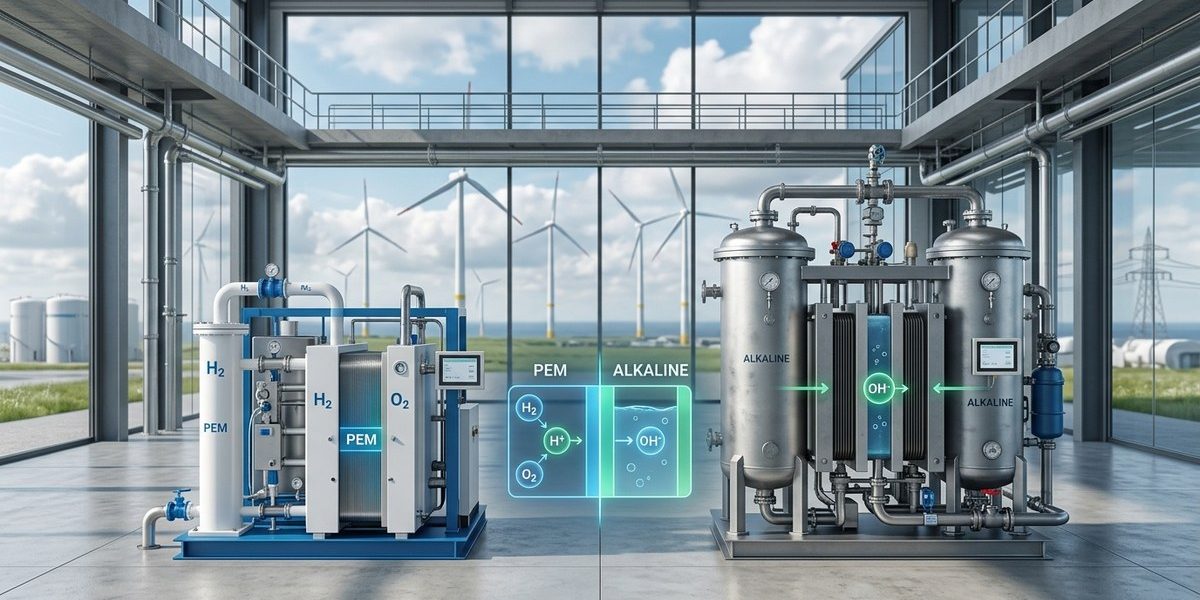
Choosing the right electrolyser technology can make or break a green hydrogen project in Denmark. With the country racing to hit its 2026 energy targets, the debate between PEM (Proton Exchange Membrane) and Alkaline electrolysers has never been more important. Both technologies can produce green hydrogen from renewable electricity, but they behave very differently when connected to Danish wind turbines or solar arrays. If you are an energy policy analyst, a renewable engineer, or a project developer evaluating the Danish market, this comparison will help you decide which technology fits your specific needs.
PEM electrolysers offer superior flexibility for Denmark’s variable wind power, with response times under one second and a wider operating range. Alkaline electrolysers remain the cheaper option for steady, baseload production, with lower capital costs and longer operational lifespans. For most Danish projects in 2026, the choice depends on whether you prioritise dynamic operation or upfront cost savings.
Understanding the Core Differences
At a fundamental level, both technologies split water into hydrogen and oxygen using electricity. The difference lies in how they manage the electrolyte and the membrane.
Alkaline electrolysers use a liquid potassium hydroxide solution as the electrolyte. They have been around for decades and are considered the mature, reliable workhorse of the hydrogen world. PEM electrolysers use a solid polymer membrane that conducts protons while blocking gases. This design allows them to operate at higher current densities and respond faster to changes in power input.
For Danish projects, this distinction matters because Denmark’s electricity grid is heavily dependent on wind power. Wind output can fluctuate wildly within minutes. A technology that can ramp up and down without damage is worth its weight in gold.
Performance Comparison for Danish Conditions
Let us look at the key performance metrics side by side.
| Parameter | Alkaline Electrolyser | PEM Electrolyser |
|---|---|---|
| Operating temperature | 60 to 80 °C | 50 to 80 °C |
| Current density | 0.2 to 0.4 A/cm² | 1.0 to 2.0 A/cm² |
| System efficiency (LHV) | 63 to 70 % | 56 to 68 % |
| Cold start time | 20 to 60 minutes | Under 5 minutes |
| Load range | 15 to 100 % | 0 to 100 % |
| Response time | Seconds to minutes | Milliseconds |
| Lifetime (stack) | 60,000 to 90,000 hours | 40,000 to 60,000 hours |
| Capital cost (EUR/kW) | 600 to 900 | 800 to 1,300 |
The table tells a clear story. Alkaline electrolysers are cheaper and last longer, but they struggle with dynamic operation. PEM electrolysers cost more upfront but offer the flexibility that Danish wind power demands.
Why Dynamic Response Matters in Denmark
Denmark has some of the highest wind penetration rates in the world. In 2025, wind power covered over 55 percent of the country’s electricity demand. That share is growing. When a storm rolls in from the North Sea, wind turbines can suddenly produce twice their normal output. An electrolyser that cannot ramp up quickly will waste that cheap, abundant electricity.
PEM electrolysers can go from zero to full load in under one second. Alkaline systems need several minutes to adjust, and they cannot safely operate below about 15 percent load. This limitation means that during periods of low wind, an alkaline electrolyser may need to shut down entirely, losing production time.
For a project developer in Esbjerg or the Port of Frederikshavn, the choice is clear. If your electrolyser will be paired directly with a wind farm, PEM technology reduces curtailment and captures more renewable energy.
Cost Considerations for Danish Projects
Capital expenditure is only part of the story. You also need to consider operational costs, maintenance, and stack replacement.
Alkaline electrolysers have a simpler design with no precious metal catalysts. This keeps the upfront cost lower. Their longer stack life means you replace the core less often, which reduces long term maintenance budgets. For a project with a 20 year horizon, this can save significant money.
PEM electrolysers use iridium and platinum catalysts. These materials are expensive and subject to supply chain constraints. The stack needs replacing after 40,000 to 60,000 hours of operation, which adds to the total cost of ownership. However, PEM systems require less maintenance overall because they have fewer moving parts and no corrosive liquid electrolyte to manage.
The Danish Energy Agency’s technology data catalogue from 2025 shows that levelised cost of hydrogen for alkaline systems ranges between 4.50 and 6.00 EUR/kg, while PEM systems range between 5.00 and 7.50 EUR/kg. The gap is narrowing as manufacturing scales up.
Three Practical Steps to Choose Your Technology
If you are evaluating a specific project, follow this process.
-
Analyse your power source profile. Gather at least one year of wind or solar generation data for your site. Calculate the number of hours per year when output drops below 15 percent of rated capacity. If that figure exceeds 500 hours, PEM will likely capture more production.
-
Model your hydrogen demand pattern. Do you need a steady supply for industrial processes like ammonia production, or will you feed hydrogen into a flexible storage system? Steady demand favours alkaline. Variable demand favours PEM.
-
Run a full lifecycle cost analysis. Include stack replacement costs, auxiliary power consumption, and the cost of downtime. Use Danish electricity price forecasts from Energinet to estimate revenue from grid services if you choose PEM.
Common Mistakes to Avoid
Developers often make the same errors when selecting electrolysers for Danish projects.
-
Ignoring grid services revenue. PEM electrolysers can provide frequency response and balancing services to the Danish grid. This can generate additional income of 10 to 20 EUR per MWh of electricity consumed. Alkaline systems are too slow to participate in these markets.
-
Overestimating stack lifetime. Stack degradation accelerates with frequent cycling. If your PEM electrolyser will start and stop daily, expect the stack to need replacement closer to 40,000 hours than 60,000 hours. Factor this into your financial model.
-
Underestimating balance of plant costs. Alkaline systems require gas purification to remove potassium hydroxide mist from the hydrogen stream. PEM systems produce higher purity hydrogen directly, which can save on downstream processing.
-
Assuming all Danish projects are the same. A project in Copenhagen with access to offshore wind and district heating networks has different requirements than a remote project in Thyborøn. Local conditions matter.
Expert Advice from the Danish Hydrogen Valley
“We have learned that flexibility is not a luxury in Denmark. It is a necessity. Our wind profile demands an electrolyser that can follow the power curve. PEM gives us that ability. For baseload applications with steady renewable supply, alkaline still has a strong case. The key is matching the technology to the specific renewable resource.”
* Senior Engineer at Hydrogen Valley Denmark, 2026
This advice reflects the real world experience of Danish projects. The Hydrogen Valley in Jutland has deployed both technologies and found that PEM outperforms in dynamic scenarios while alkaline excels in steady state operation.
Future Trends for 2026 and Beyond
The technology landscape is shifting. Several Danish manufacturers are developing next generation alkaline electrolysers that can operate at higher current densities and respond faster. These systems use advanced membranes and improved electrode designs. If successful, they could narrow the performance gap with PEM.
PEM technology is also evolving. Researchers at the Technical University of Denmark are working on reducing iridium loading in catalysts. This could lower costs and reduce supply chain risks. The Danish government’s 2026 hydrogen strategy includes funding for both technology tracks, recognising that no single solution fits all applications.
For project developers, this means staying informed about new product releases. The top innovations in Danish electrolyser technologies for 2026 include hybrid systems that combine the best features of both PEM and alkaline designs.
Making Your Final Decision
There is no universal winner in the PEM vs Alkaline debate for Denmark. The right choice depends on your specific project parameters.
Choose PEM if:
– Your electrolyser will be directly coupled to wind or solar
– You want to participate in grid balancing markets
– You need fast start up and shut down capability
– Space is limited (PEM has a smaller footprint)
Choose Alkaline if:
– You have a steady, predictable renewable power supply
– Your priority is lowest possible capital cost
– You plan to run the system continuously at high load factors
– You have space for larger equipment and gas purification
For most Danish green hydrogen projects in 2026, the decision will come down to whether you value flexibility or upfront cost savings more. Both technologies can deliver green hydrogen that meets Denmark’s ambitious climate goals. The trick is matching the tool to the job.
Putting Your Knowledge to Work
Now that you understand the trade offs, take the next step. Review your project’s power data and hydrogen demand profile. Run the three step analysis described earlier. If you need deeper technical guidance, the 5 key performance metrics for evaluating electrolyser efficiency in Danish energy projects can help you build a robust evaluation framework.
The Danish green hydrogen sector is moving fast. Choosing the right electrolyser technology today will determine whether your project thrives or struggles in the years ahead. Get the data right, match the technology to your conditions, and you will be well positioned to contribute to Denmark’s energy transition.