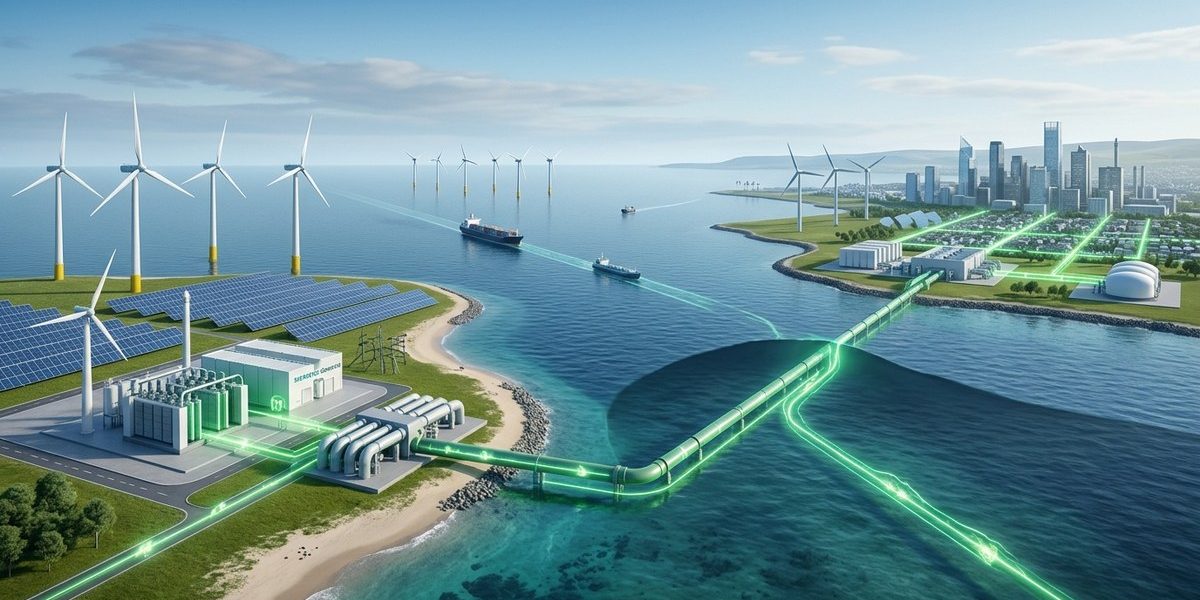
Denmark is often described as a living laboratory for green hydrogen. While that phrase gets used a lot, the reality is more grounded. In 2026, the Danish grid is not a distant ambition. It is a physical, operational asset that is reshaping how energy moves from wind turbines to industrial plants across the North Sea region. For UK energy policy analysts and resilience planners, this is not just interesting. It is a working template.
Denmark’s 2026 green hydrogen grid proves that national-scale hydrogen infrastructure is technically and economically viable. The UK can adopt this blueprint by focusing on three pillars: repurposing existing gas pipelines, co-locating electrolysers with offshore wind, and creating cross-border trade agreements. This article breaks down the Danish model step by step.
The Danish Grid in 2026: What Has Actually Changed
The headline is simple. Denmark now operates a dedicated hydrogen pipeline network that connects its western wind farms to industrial hubs in Esbjerg and across the border into Germany. This is not a pilot. It is a commercial corridor.
The key shift happened in late 2025 when Energinet, the Danish transmission system operator, completed the first phase of a repurposed natural gas pipeline. By converting existing steel infrastructure rather than digging new trenches, Denmark cut capital costs by roughly 40 percent compared to a brand new build. That decision alone saved billions of kroner and shaved two years off the timeline.
For UK planners, this is the single most transferable lesson. The UK has a dense network of ageing gas pipes. Many are due for decommissioning. Instead of removing them, the Danish model shows you can clean, test, and repurpose them for hydrogen blends or pure hydrogen transport.
How Denmark Built the Grid: A Numbered Process
The Danish approach followed a clear sequence. Here is how they did it.
-
Map existing gas infrastructure for hydrogen readiness. Energinet ran a full audit of every metre of pipe in Jutland and Funen. They tested for metal fatigue, leak points, and connection compatibility with industrial users.
-
Secure anchor customers before building. Denmark did not build a speculative grid. They signed long term off take agreements with three major industrial clusters: a refinery in Fredericia, a steel recycling plant in Esbjerg, and a combined heat and power plant in Aarhus. These customers guaranteed demand.
-
Phase the connection to offshore wind. Electrolysers were installed at coastal nodes near existing wind farm substations. This avoided long cable runs and allowed the grid to absorb excess power during high wind periods. The result is a system that can switch between electricity export and hydrogen production in under 15 minutes.
-
Integrate cross-border trade. The pipeline to Germany is not an afterthought. It is a revenue stream. Denmark can sell hydrogen to German industrial buyers when local demand is low, and import when needed. This balancing act keeps the grid economically stable.
What UK Resilience Planners Should Watch
The Danish grid offers three structural lessons that apply directly to UK energy security.
-
Storage as a service. Denmark uses salt caverns in the northern Jutland region for hydrogen storage. These caverns act like a giant battery. When wind generation is high, electrolysers run at full capacity and hydrogen is stored. When wind drops, the stored hydrogen feeds into the grid. This decouples power supply from weather variability.
-
Electrolyser clustering. Instead of one giant plant, Denmark built multiple medium sized electrolyser facilities near demand centres. This reduces transmission losses and makes the system more resilient to a single point of failure. If one plant goes offline, the others cover the gap.
-
Regulatory speed. Denmark passed a national hydrogen law in 2024 that classified hydrogen pipelines as part of the national energy infrastructure, not a new experimental category. This allowed developers to use existing permitting frameworks. The UK could adopt a similar classification to fast track projects.
Comparing Danish and UK Approaches
| Element | Danish Model (2026) | Current UK Position | UK Opportunity |
|---|---|---|---|
| Pipeline strategy | Repurpose existing gas network | Gas network mostly active, some decommissioning planned | Target decommissioned spur lines for first hydrogen corridors |
| Electrolyser siting | Co-located with offshore wind substations | Mostly onshore, separate from wind assets | Plan co-location in future offshore wind lease rounds |
| Storage | Salt caverns (natural geology) | Limited salt cavern capacity, some depleted gas fields | Map depleted North Sea gas fields for hydrogen storage |
| Cross-border trade | Active pipeline to Germany | No hydrogen interconnectors yet | Prioritise Ireland and Norway as first trade partners |
| Regulatory framework | Dedicated hydrogen law passed in 2024 | Hydrogen classified under general energy bill | Introduce a specific Hydrogen Infrastructure Bill |
The Technology Stack Behind the Grid
Denmark’s grid relies on three core technologies that are now commercially mature.
Proton exchange membrane (PEM) electrolysers dominate the Danish landscape. They respond faster to fluctuating wind power than older alkaline designs. This is critical when your electricity source changes every 20 minutes.
Digital twin software runs the entire network. Operators at Energinet use a real time digital model that simulates pressure, flow, and purity across every segment. If a fault appears in the simulation, maintenance crews are dispatched before the physical pipe ever feels the stress.
Methanation units sit at two strategic nodes. They convert excess hydrogen and captured CO2 into synthetic methane. This methane can be fed directly into the existing natural gas grid for heating homes. It is a flexible overflow valve that prevents hydrogen from being wasted during low demand periods.
For a deeper look at how these technologies work together, see how digital twins are optimising danish green hydrogen production efficiency.
What This Means for UK Energy Security
The UK faces a specific vulnerability that Denmark has already solved. When the wind does not blow, the UK relies on gas imports. Denmark now relies on stored hydrogen and cross-border pipeline trade.
The Danish model does not require the UK to build everything at once. Start with a single hydrogen valley. Connect an industrial cluster in Teesside or Humberside to a nearby offshore wind farm. Repurpose a short section of decommissioned pipeline. Sign an offtake agreement with a local refinery or chemical plant. That single corridor becomes the proof of concept.
Denmark’s experience shows that the first corridor is the hardest. Once you have one, the second and third come much faster. The regulatory framework, the safety standards, and the workforce skills are already in place.
“The Danish grid is not a miracle. It is the result of patient, incremental decisions made over five years. Every pipe, every valve, every contract was a choice. The UK can make those same choices starting tomorrow.”
— Lars B. Sørensen, former head of hydrogen strategy at Energinet
Financing the Transition: How Denmark Paid for It
Denmark used a mix of public grants and private capital. The European Union’s Important Projects of Common Interest (IPCI) programme covered about 30 percent of the pipeline repurposing cost. The Danish government contributed another 20 percent through its Green Fuels Initiative. Private investors, including pension funds and industrial off takers, funded the remaining 50 percent.
The key insight is that private capital only came after the anchor customers were signed. Investors wanted to see guaranteed revenue before committing. This is a lesson for UK hydrogen projects seeking finance.
For more on the financial side, read about 6 financial incentives supporting electrolyser projects in Denmark for 2026.
Common Mistakes to Avoid
Based on Denmark’s early stumbles, here are the pitfalls UK planners should sidestep.
- Building electrolyser capacity before securing grid connection. Denmark’s first large electrolyser sat idle for six months while grid upgrades were completed. Connect the grid first, then build the plant.
- Over specifying purity requirements. Early Danish projects demanded 99.999 percent hydrogen purity for all uses. Industrial heating and power generation only need 99 percent. The extra purification added cost for no benefit.
- Ignoring local community engagement. One pipeline route in southern Jutland faced delays because residents worried about safety. Denmark now runs public information campaigns before construction begins.
How Hydrogen Valleys Are Scaling the Model
Denmark has established three hydrogen valleys: one in Esbjerg focused on maritime fuel, one in Aarhus focused on industrial heat, and one in Copenhagen focused on transport. Each valley operates as a mini grid with its own electrolysers, storage, and local distribution.
These valleys are not isolated. They are connected to the national backbone. This hub and spoke design means that if one valley has a surplus, it can export to another region. The UK could replicate this by designating hydrogen valleys in Teesside, South Wales, and Grangemouth, then linking them via repurposed gas pipelines.
Learn more about how hydrogen valleys in Denmark are creating a blueprint for regional green hydrogen hubs by 2026.
What the UK Should Do in the Next 12 Months
Denmark’s success did not happen by accident. It followed a deliberate schedule. Here is a realistic timeline for UK action based on the Danish precedent.
-
Complete a national hydrogen infrastructure audit. Map every metre of decommissioned gas pipeline, every depleted gas field, and every offshore wind farm connection point. Publish the results by mid 2027.
-
Select three anchor industrial clusters. Sign non binding memoranda of understanding with refineries, steel plants, or chemical facilities in those clusters. Guarantee that hydrogen will be available by 2028.
-
Amend the Energy Act to classify hydrogen pipelines as national infrastructure. This removes planning barriers and signals to investors that the government is serious.
-
Launch a hydrogen storage feasibility study for the Southern North Sea. Many depleted gas fields there are geologically similar to Denmark’s salt caverns. Test them for hydrogen storage.
-
Open trade talks with Norway and Ireland. Denmark’s pipeline to Germany proves that cross border hydrogen trade is viable. The UK should secure its own import export routes early.
Why the Danish Grid Matters for UK Homes and Businesses
This is not an abstract policy discussion. The Danish grid already delivers heat to homes in Esbjerg during winter, when wind speeds drop and electricity prices spike. Instead of burning imported natural gas, those homes use hydrogen from storage. The cost is stable. The supply is domestic.
For UK businesses, especially in heavy industry, the Danish model offers a path to decarbonise without relocating. A chemical plant in Runcorn or a glass factory in Sheffield could connect to a hydrogen pipeline instead of installing its own electrolyser. That shared infrastructure reduces capital risk for every single user.
A Final Look at the Road Ahead
Denmark’s green hydrogen grid in 2026 is not perfect. It still relies on some natural gas for peak backup. The storage capacity is smaller than what the UK could achieve with its depleted North Sea fields. And the cross border pipeline to Germany is only at 60 percent of its planned capacity.
But the grid is working. It is delivering hydrogen to paying customers. It is reducing carbon emissions. And it is proving that the technology, the economics, and the regulation can align.
The UK has every advantage Denmark has: wind, geology, industrial demand, and a skilled workforce. What the UK needs now is the same patient, incremental approach. Start with one corridor. Prove it works. Then build the next one.
If you are involved in UK energy policy, infrastructure investment, or resilience planning, the Danish grid is the closest thing to a finished blueprint you will find. The lessons are there. The only question is how soon the UK chooses to apply them.