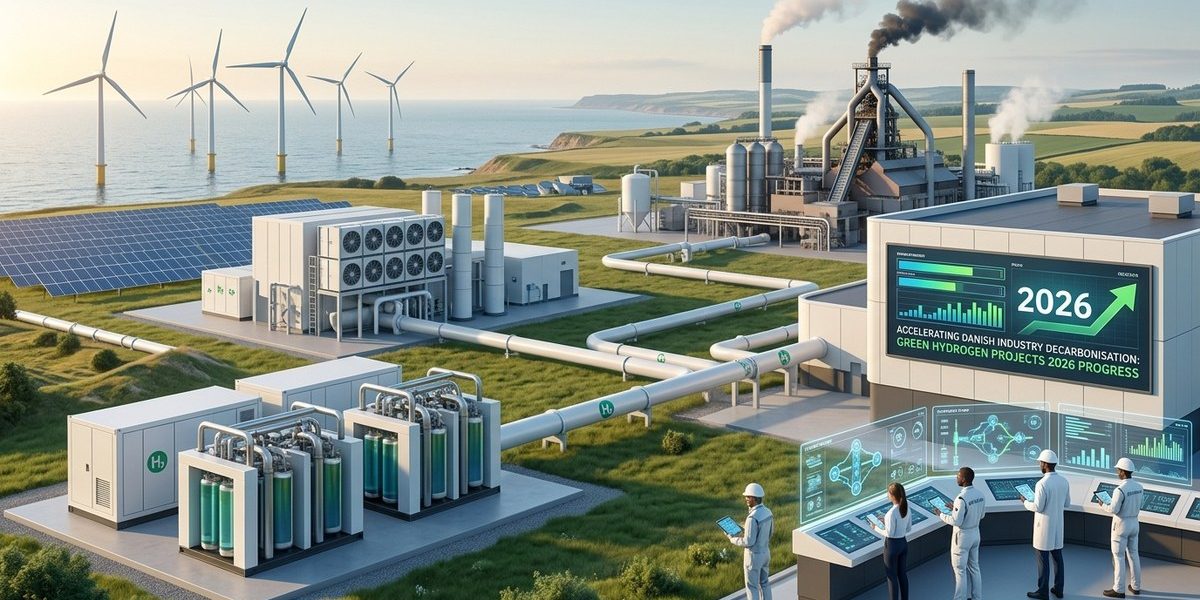
Denmark is firmly establishing itself as a leader in green hydrogen development, with ambitious projects set to accelerate industry decarbonisation by 2026. As the country pushes forward with innovative solutions and strategic collaborations, Danish green hydrogen initiatives are shaping a more sustainable energy landscape across Europe. This momentum not only supports climate goals but also unlocks new economic opportunities for industries, policymakers, and environmental advocates alike.
By 2026, Denmark’s green hydrogen projects are transforming industries through large-scale electrolyser deployments, innovative infrastructure, and strategic collaborations. These initiatives are crucial for meeting climate targets, creating economic growth, and positioning Denmark as a European leader in sustainable energy. The country’s approach offers valuable insights for policymakers and industry professionals aiming to accelerate decarbonisation and harness the full potential of green hydrogen technology.
Danish green hydrogen projects in 2026 are reshaping industry landscape
Denmark’s commitment to green hydrogen is evident in its comprehensive portfolio of projects set to reach commercial scale by 2026. These initiatives aim to produce clean hydrogen using renewable energy sources, primarily wind and solar power. The focus is on establishing a sustainable, integrated energy system that reduces reliance on fossil fuels and significantly lowers greenhouse gas emissions.
Leading this charge are large electrolysis facilities, strategic cross-border infrastructure, and partnerships with industrial sectors eager to decarbonise. The Danish government’s proactive policies and funding schemes are instrumental in supporting these projects. As a result, Denmark is not only advancing its own climate goals but also creating a blueprint for other nations aspiring to implement green hydrogen at scale.
The core of Denmark’s green hydrogen landscape in 2026
Expanding electrolysis capacity
A key driver of Denmark’s green hydrogen ambitions lies in its expanding electrolysis capacity. Several large electrolysis plants are under construction or operational, utilising cutting-edge Danish innovations in electrolyser technology. These systems are designed to maximise efficiency, minimise costs, and integrate seamlessly with renewable power sources.
Strategic infrastructure developments
Denmark is investing heavily in infrastructure to facilitate hydrogen transport and storage. Projects like the Danish hydrogen backbone aim to connect production sites with industrial hubs and export terminals. Cross-border pipelines linking Denmark with neighbouring countries such as Germany are also progressing, creating a European hydrogen corridor. This infrastructure ensures reliable supply chains and opens markets for Danish green hydrogen exports.
Industry integration and applications
Industries such as cement, chemical manufacturing, and heavy transport are adopting green hydrogen to meet strict decarbonisation targets. Danish projects focus on creating end-to-end solutions, from production to utilisation, ensuring that hydrogen becomes a practical fuel for industry. Pilot initiatives and large-scale installations demonstrate how hydrogen can replace fossil fuels in demanding applications.
Practical steps for advancing Danish green hydrogen projects
- Develop large-scale electrolyser facilities: Invest in innovative electrolysis technology, ensuring high efficiency and scalability. Danish companies are leading in this area, offering world-class solutions.
- Build and upgrade infrastructure: Prioritise the deployment of hydrogen pipelines and storage facilities. Collaborations with neighbouring countries can unlock export potential.
- Foster industrial partnerships: Engage industries early to co-develop tailored hydrogen solutions. Demonstrating real-world applications accelerates adoption.
- Secure policy support and funding: Leverage government incentives, grants, and international cooperation to de-risk projects and attract private investments.
- Focus on renewable energy integration: Maximise the utilisation of wind and solar farms for electrolysis, ensuring that hydrogen production remains truly green.
Key advantages of Danish green hydrogen projects
- Decarbonisation of heavy industries
- Creation of new jobs and economic growth
- Strengthening Denmark’s energy independence
- Positioning Denmark as Europe’s green energy hub
Common pitfalls to avoid
| Technique | Mistake | Explanation |
|---|---|---|
| Overinvesting in unproven electrolyser tech | Technological inefficiency | Focus on established Danish innovations reduces risk and ensures reliability |
| Ignoring grid integration | Power supply constraints | Proper planning avoids supply bottlenecks and optimises renewable utilisation |
| Underestimating storage needs | Insufficient storage capacity | Adequate storage ensures stable supply and market flexibility |
| Neglecting policy alignment | Regulatory gaps | Consistent policy frameworks expedite project development and deployment |
“A strategic approach combining technological innovation, infrastructure development, and policy support is essential to maximise the impact of Denmark’s green hydrogen projects in 2026.” — Industry expert
Denmark’s blueprint for green hydrogen success in 2026
Danish projects are demonstrating how focused investments and smart planning can turn green hydrogen into a core component of national and regional energy systems. The country’s approach emphasises a collaborative ecosystem, connecting renewable energy producers, electrolyser manufacturers, industrial users, and policymakers.
Key initiatives include the HySynergy project in Copenhagen, which integrates electrolysis with existing wind farms, and the North Sea hydrogen corridor, which plans to transport Danish green hydrogen to neighbouring markets. These projects showcase practical pathways towards a decarbonised industrial sector.
Looking ahead: the future of Danish hydrogen leadership
By 2026, Denmark will have established a comprehensive green hydrogen ecosystem that supports industrial decarbonisation and international energy trade. Continued innovation in electrolyser technology and infrastructure will further reduce costs and improve efficiency. Denmark’s experience will serve as a model for other countries aiming to accelerate their own hydrogen strategies.
The ongoing development of cross-border pipelines and export facilities indicates a future where Danish green hydrogen plays a vital role in Europe’s climate ambitions. Policymakers and industry leaders should consider these projects as a foundation to build resilient, sustainable energy systems.
Practical tips for policymakers and industry professionals
- Invest in research and development for Danish electrolyser innovations https://greenhydrogen.dk/top-innovations-in-danish-electrolyser-technologies-for-2026/
- Strengthen international collaborations to expand hydrogen infrastructure https://greenhydrogen.dk/how-denmark-is-leading-the-transition-to-green-hydrogen-infrastructure/
- Create favourable policy environments that support project financing and deployment
- Promote public-private partnerships to leverage funding and expertise
- Engage local communities to build support for hydrogen projects
Danish green hydrogen projects in 2026: a catalyst for industry transformation
Denmark’s forward-thinking projects are setting a benchmark for sustainable industry decarbonisation. With a robust combination of technological innovation, strategic infrastructure, and supportive policies, the country is making significant strides towards its climate targets.
As the green hydrogen landscape evolves, industry professionals and policymakers can learn from Denmark’s experience. Embracing these developments offers a pathway to a cleaner, more resilient energy future that benefits both the environment and the economy.
Harnessing the potential of Denmark’s hydrogen revolution
By applying strategic planning and fostering innovation, stakeholders can maximise the impact of Danish green hydrogen projects in 2026. Whether as a foundation for industry decarbonisation or a stepping stone for future export markets, Denmark’s approach provides a practical model for sustainable energy transition. Staying informed and adaptable will be key to capitalising on these opportunities in the years ahead.