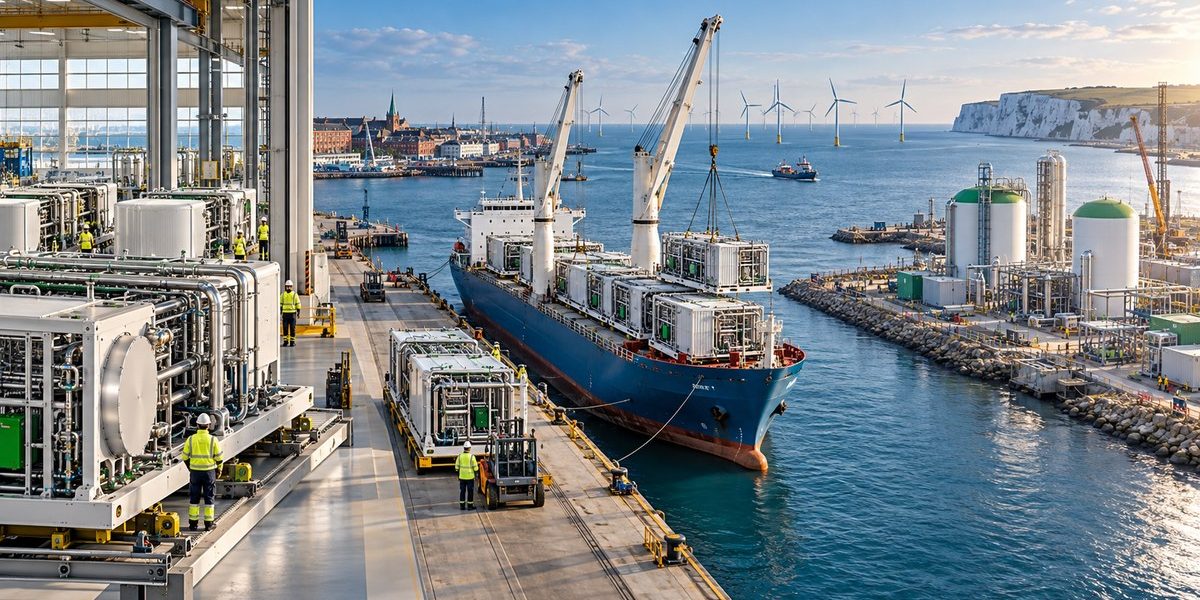
The UK’s green hydrogen ambitions have hit a familiar snag: delays. Projects are postponed. Timelines slip. Offtakers grow nervous. But look across the North Sea, and a different story is unfolding. Denmark is not just talking about green hydrogen; it is delivering it. And for UK project managers, policy analysts, and investors, the lesson is clear. The Danish electrolyser supply chain can cut your project delays, often by a year or more. In 2026, that difference matters more than ever.
Denmark’s mature electrolyser manufacturing base and integrated hydrogen infrastructure offer UK projects a proven route to faster deployment. By sourcing from Danish suppliers, UK developers can bypass long lead times, access established supply chains, and benefit from a regulatory environment that has already solved the bottlenecks currently stalling British schemes.
The real reason UK projects stall
You have seen the headlines. Project cancellations. Final investment decisions pushed back. The International Energy Agency’s Global Hydrogen Review 2025 noted that the pipeline of low-emissions production projects has shrunk. The reasons are often repeated: high electricity costs, lack of offtakers, uncertain policy support.
But there is a quieter, more operational reason. The electrolyser supply chain is not ready for the UK’s sudden demand spike. Lead times for large-scale stacks stretch beyond two years. Skilled installation teams are scarce. Grid connection queues are long.
Denmark solved these problems years ago. Its approach is not theoretical. It is practical, scaled, and available for UK projects right now.
How Denmark built a supply chain that works
Denmark did not stumble into this position. It built it deliberately, starting with its world-leading wind industry. The same engineering culture that made Vestas and Ørsted global names turned to electrolysers. Danish manufacturers now produce some of the most efficient stacks in the world, from proton exchange membrane units to high-temperature solid oxide systems.
What makes the Danish supply chain different?
- Manufacturing density. Factories in Esbjerg, Vejle, and Copenhagen produce stacks, balance-of-plant components, and control systems. This concentration means shorter lead times and easier quality assurance.
- Skilled workforce. Danish technical colleges and universities have trained a generation of hydrogen engineers. They know how to install, commission, and maintain electrolysers in real conditions.
- Integrated infrastructure. The Danish-German hydrogen backbone is already being built. Storage caverns in Lille Torup are operational. The pieces fit together.
- Regulatory maturity. Denmark’s permitting process for electrolysers is streamlined. The Energy Agency treats hydrogen production as a standard industrial activity, not a special case.
For UK projects, this means one thing: you can import Danish reliability instead of building it from scratch.
Three ways Danish electrolysers reduce UK project delays
Let us get specific. Here is how sourcing from Denmark changes your timeline.
-
Shorter manufacturing lead times. Danish factories run at high utilisation. They have existing supply agreements for raw materials like titanium and nickel. A UK project ordering a 50 MW PEM stack from a Danish supplier in early 2026 can expect delivery within 10 to 14 months. Compare that to 24 months from less established manufacturers.
-
Faster commissioning support. Danish engineers have installed electrolysers across Europe, from Germany to Spain. They know the common pitfalls: cooling system integration, power electronics tuning, hydrogen purification. Their commissioning teams can mobilise within weeks, not months.
-
Pre-certified components. Danish electrolysers often carry CE marking and TÜV certifications that UK regulators accept without additional testing. This cuts the approval phase by three to six months.
What UK project managers should look for in a Danish partner
Not all Danish suppliers are the same. The market has matured, and some have stronger track records than others. Use this table to compare potential partners.
| Criteria | Strong indicator | Warning sign |
|---|---|---|
| Manufacturing location | Factory in Denmark with visible supply chain | White-label units from unknown Asian source |
| Reference projects | At least three operational installations >10 MW | Only pilot-scale or announced projects |
| Service network | Dedicated UK or Nordic service team | Reliance on third-party contractors |
| Certification | Full CE, PED, and ATEX documentation | “Certification pending” or vague claims |
| Delivery track record | On-time delivery within 10% of quoted lead time | History of delays or scope changes |
A real example: the Danish-German hydrogen backbone
The Danish-German hydrogen pipeline, expected to be operational by 2028, is not just a Danish project. It is a proof point. It shows that Denmark can build cross-border hydrogen infrastructure at scale. The pipeline will carry green hydrogen from Danish electrolysers to German industrial users. UK projects can learn from the technical standards, the regulatory approvals, and the commercial models developed for this route.
For UK investors, the lesson is practical. If you want to avoid the delays that have plagued other projects, partner with a supply chain that has already built something real. The Danish-German hydrogen backbone is not a PowerPoint slide. It is steel in the ground.
Common mistakes UK projects make when sourcing electrolysers
Even with a good Danish partner, things can go wrong. Here are the most frequent errors.
- Underestimating balance-of-plant complexity. The electrolyser stack is only half the system. Water treatment, hydrogen drying, compression, and cooling all need careful specification. Danish suppliers include these in their packages. UK buyers sometimes try to source them separately and create integration headaches.
- Ignoring grid interaction. Electrolysers are large electrical loads. They can cause harmonics, voltage flicker, and reactive power issues. Danish engineers design for grid stability. UK projects often treat this as an afterthought and pay for it later.
- Skipping the warranty details. Danish warranties are robust but specific. They require certain maintenance schedules and operating parameters. Read the fine print before signing.
“The best advice I can give UK project developers is to treat the electrolyser supplier as a long-term partner, not a commodity vendor. The Danish companies that succeed are the ones that stay involved after commissioning. They help you optimise performance, troubleshoot issues, and plan for expansion. That relationship is worth more than a few percentage points on the initial price.” — Henrik Sørensen, Senior Project Manager, Green Hydrogen Hub Denmark
How to start your Danish supply chain engagement in 2026
If you are ready to reduce delays, here is a practical five-step plan.
- Map your requirements. Know your stack size, operating pressure, output purity, and grid connection details before you talk to suppliers.
- Shortlist three Danish manufacturers. Look for those with UK or Nordic reference installations. Ask for site visit contacts.
- Request a technical package. Ask for full datasheets, certification documents, and a proposed delivery schedule. Compare them side by side.
- Negotiate a phased delivery. If your project is large, ask for the first stacks to be delivered early. Use them for commissioning training and integration testing.
- Plan for ongoing support. Include a two-year service agreement in your contract. Danish suppliers offer remote monitoring and predictive maintenance.
Why 2026 is the year to act
The UK government’s hydrogen production targets are ambitious. The market is real. But the window for first-mover advantage is closing. Projects that secure their electrolyser supply chain in 2026 will be producing hydrogen by 2028 or 2029. Those that wait will face longer lead times and higher costs as global demand for electrolysers continues to grow.
Denmark’s supply chain is not infinite. Its manufacturers are already allocating production slots for 2027. The time to book your place is now.
Build your project on Danish foundations
The UK does not need to reinvent the wheel. Denmark has spent a decade building a green hydrogen supply chain that works. It has the manufacturing capacity, the skilled workforce, and the infrastructure to support UK projects. By tapping into that ecosystem, you can cut your timeline, reduce your risk, and get your project online faster.
Start by reading about what makes Denmark a global leader in electrolyser manufacturing. Then look at how Danish electrolysers are cutting green hydrogen production costs. Finally, consider the financial incentives supporting electrolyser projects in Denmark and how they might apply to UK collaborations.
The path is clear. The partners are ready. The only question is whether your project will be part of the 2026 wave or left waiting for the next one.