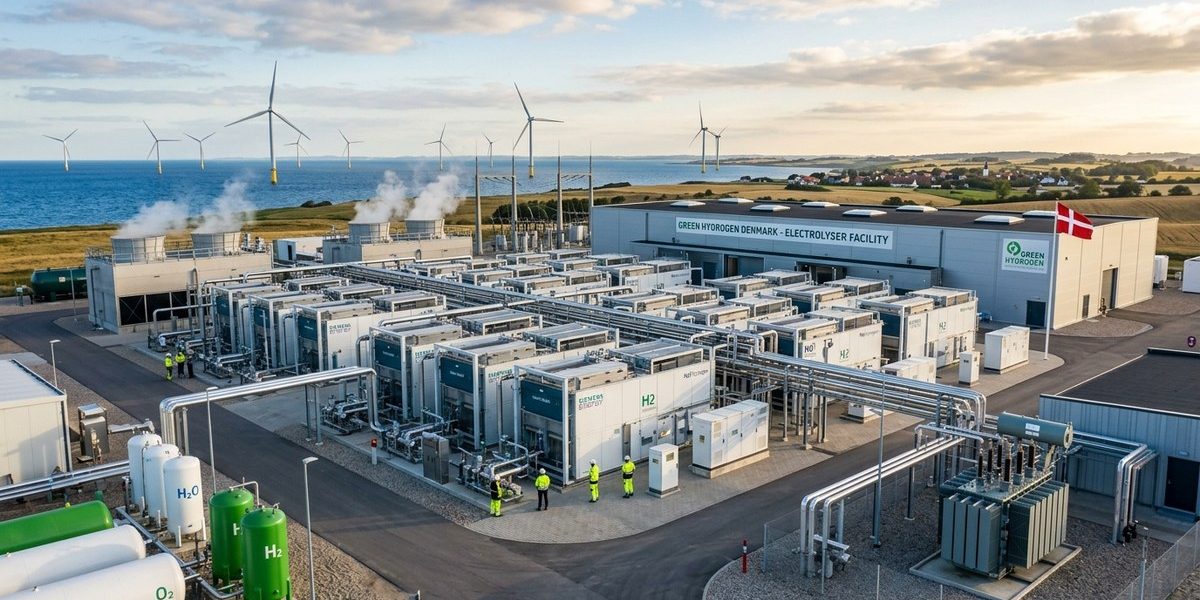
Denmark’s journey toward a sustainable energy future is nothing short of inspiring. As a global leader in green hydrogen development, Denmark has set a formidable example with its rapid deployment of industrial electrolysers. These advanced systems are transforming how energy is produced, stored, and utilised, positioning Denmark at the forefront of the renewable revolution. In 2026, Denmark’s leadership in this field is shaping industry standards, influencing policies, and opening doors for collaborative innovations across Europe and the UK.
Denmark leads in industrial electrolysers through strategic investments, technological innovation, and robust policy frameworks, making it a pioneer in green hydrogen production and setting a blueprint for others to follow.
Denmark’s Strategic Focus on Industrial Electrolysers
Denmark has committed to becoming a global hub for green hydrogen by investing heavily in large-scale electrolysis facilities. This commitment is backed by government policies that encourage renewable energy integration and facilitate market growth. The country’s focus on deploying industrial electrolysers is driven by the need to decarbonise sectors such as manufacturing, transportation, and shipping.
The Danish government has aligned its policies with the European Union’s ambitions for a sustainable energy transition. It has launched programmes to support research, development, and commercialisation of electrolyser technologies. This strategic focus has resulted in Denmark becoming a testing ground for innovative electrolyser designs and operational techniques, securing its position as a leader in the field.
How Denmark Is Advancing Electrolyser Deployment
Highly effective collaborations between industry, academia, and policymakers have accelerated the deployment of electrolysers across Denmark. These collaborations facilitate knowledge sharing, innovation, and infrastructure development. Notable projects include large-scale green hydrogen plants powered by wind farms, capitalising on Denmark’s extensive wind energy resources.
These projects not only produce green hydrogen efficiently but also demonstrate the technological and economic viability of industrial electrolysers at scale. As a result, Denmark has attracted international investment and expertise, further strengthening its leadership position.
Practical steps Denmark takes to boost green hydrogen output
- Strategic site selection: Placing electrolysers near renewable energy sources to minimise transmission losses.
- Technology optimisation: Using the latest electrolyser designs that maximise efficiency and lifespan.
- Policy support: Implementing favourable tariffs, subsidies, and regulatory frameworks that encourage investment and innovation.
| Techniques | Common Mistakes |
|---|---|
| Using high-efficiency PEM electrolysers | Underestimating maintenance needs |
| Integrating electrolysers with wind farms | Overlooking grid stability issues |
| Implementing advanced control systems | Ignoring safety protocols |
Industry experts highlight that “the real challenge lies in scaling up electrolyser capacity without compromising efficiency or safety,” emphasising the importance of ongoing research and rigorous standards.
Danish Innovations in Electrolyser Technology
Denmark’s electrolyser manufacturers are pioneering several technological advancements. These include developments in solid oxide electrolysis, which operates at higher temperatures, and innovations in membrane materials that improve durability and reduce costs.
Danish companies like H2 Logic and Orsted have introduced modular electrolysers that can easily be expanded as demand grows. This flexibility allows for incremental investment and reduces financial risk, making large-scale deployment feasible.
Challenges and how Denmark overcomes them
Despite its successes, Denmark faces hurdles such as high capital costs and the need for reliable renewable energy supply. To overcome these, Denmark has:
- Secured long-term renewable energy contracts to ensure a stable power supply.
- Developed financing models that attract private investment.
- Fostered international partnerships to share knowledge and reduce costs.
The Future of Green Hydrogen in Denmark
Looking ahead, Denmark aims to produce 10 gigawatts of green hydrogen capacity by 2030. Innovative initiatives include the Power-to-X project, which converts excess renewable energy into hydrogen and other fuels, and cross-border collaborations with neighbouring countries.
These efforts will enhance Denmark’s export capacity and support the decarbonisation of European industries. Additionally, ongoing research into electrolysis efficiency and cost reduction will make green hydrogen more accessible and competitive.
How industry professionals can contribute
Energy professionals, researchers, and policymakers can support Denmark’s leadership by:
- Participating in collaborative research projects.
- Sharing best practices and technological innovations.
- Developing policies that incentivise green hydrogen adoption.
Emulating Denmark’s Example for a Sustainable Energy Future
Denmark’s leadership demonstrates that strategic planning, technological innovation, and strong partnerships are key to advancing industrial electrolysers. Countries looking to develop their green hydrogen sectors can learn from Denmark’s comprehensive approach.
By investing in research, fostering supportive regulations, and leveraging renewable energy sources, other nations can accelerate their own energy transitions. The Danish model offers a clear pathway to a low-carbon economy, inspiring global efforts to achieve sustainability goals.
Moving Towards a Greener Tomorrow
As Denmark continues to lead in industrial electrolysers, the momentum for green hydrogen grows stronger across Europe and the UK. It’s an exciting time for energy professionals and policymakers committed to building a sustainable future. Embracing these innovations and lessons can help accelerate the transition to clean energy, reduce emissions, and create new economic opportunities.
Harnessing Denmark’s experience, the UK and other countries can develop their own green hydrogen strategies, ensuring a resilient and sustainable energy landscape for generations to come.