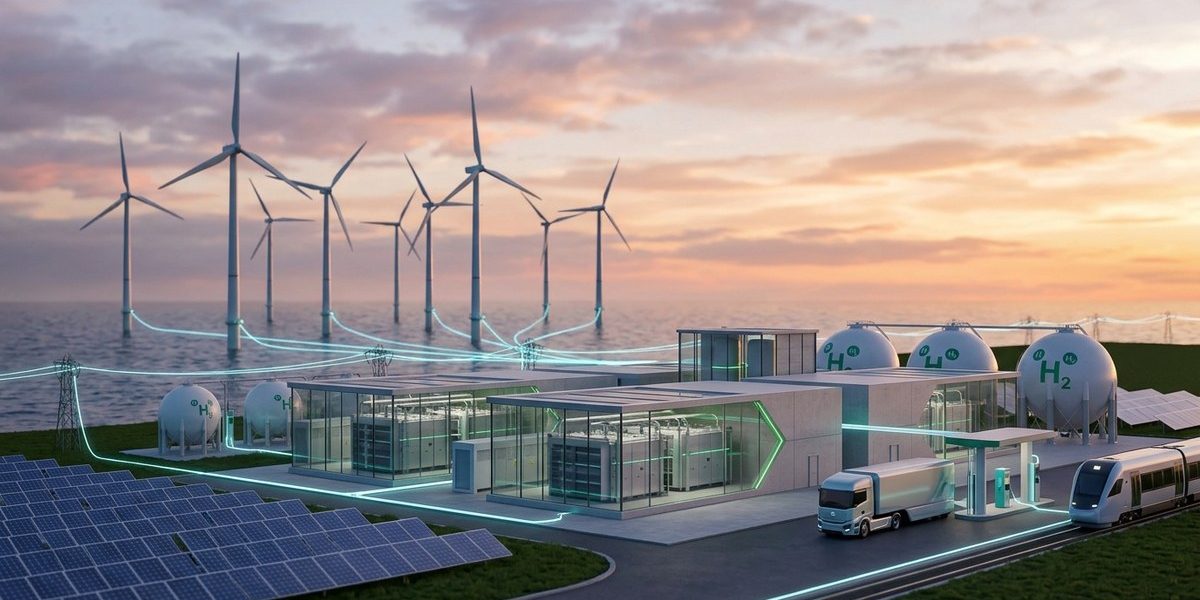
Denmark is establishing itself as a frontrunner in the green hydrogen revolution. Its ambitious projects and strategic investments are transforming the country into a hub for renewable energy and sustainable industry. By integrating offshore wind, advanced electrolysis technology, and innovative infrastructure planning, Denmark is paving the way for a cleaner, more resilient energy future. This comprehensive approach not only supports its climate goals but also offers valuable lessons for nations seeking to harness green hydrogen’s potential.
Denmark’s green hydrogen infrastructure combines offshore wind, electrolyser technology, and strategic planning to create a sustainable energy landscape. Its initiatives exemplify how integrating renewable sources can revolutionise industry and support climate targets, offering a model for other countries aiming to develop their own green hydrogen economy in 2026.
Denmark’s vision for green hydrogen infrastructure
Denmark aims to become a leader in green hydrogen by leveraging its abundant renewable resources. The country’s strategy revolves around producing hydrogen through electrolysis powered entirely by renewables, mainly offshore wind. This approach not only reduces carbon emissions but also creates new economic opportunities, including export potential and job creation. The Danish government has set clear targets to scale up capacity and build a resilient infrastructure network that connects production sites with industrial consumers and export terminals.
The vision encompasses both national energy security and climate commitments. By 2030, Denmark plans to significantly increase its green hydrogen output, enabling industries such as shipping, heavy transport, and manufacturing to transition away from fossil fuels. The focus on building a comprehensive infrastructure framework ensures seamless integration of green hydrogen into Denmark’s existing energy systems.
Key components of Denmark’s green hydrogen infrastructure
Denmark’s green hydrogen infrastructure hinges on several critical elements that work together to create a sustainable ecosystem:
-
Offshore wind farms: Denmark’s offshore wind capacity is among the largest in Europe. These turbines generate clean electricity essential for powering electrolysis plants. The country has strategic plans to expand offshore wind to meet future hydrogen demands.
-
Electrolyser technology: Danish companies are at the forefront of developing high-efficiency electrolysers. These devices split water into hydrogen and oxygen using renewable electricity, producing green hydrogen at scale. Innovations such as solid oxide and proton exchange membrane (PEM) electrolyser systems are central to this effort.
-
Hydrogen storage and transport: Building effective storage solutions and pipeline networks is vital. Denmark is investing in underground storage facilities and hydrogen pipelines to facilitate transportation from production sites to end-users and export points.
-
Refuelling stations and industrial clusters: Infrastructure for refuelling hydrogen-powered vehicles and integrating green hydrogen into industrial processes is being established across key regions, including the Greater Copenhagen area and industrial zones in Jutland.
How Denmark is scaling up its infrastructure
Scaling up involves a series of coordinated actions:
-
Expanding offshore wind capacity: Denmark is investing in new offshore wind farms, aiming to reach 30 GW by 2030. These projects provide the renewable electricity needed for large-scale hydrogen production.
-
Deploying advanced electrolysers: Danish firms are deploying modular electrolyser units across multiple sites, enabling flexible and scalable hydrogen production.
-
Developing export terminals: Ports like Hirtshals are being upgraded to serve as hydrogen export hubs, facilitating international trade with neighbouring countries.
-
Forming strategic partnerships: Denmark collaborates with industry leaders, research institutions, and neighbouring nations to accelerate infrastructure development and share technological innovations.
Practical steps for developing green hydrogen infrastructure
Developing such infrastructure involves a clear sequence:
-
Assess renewable energy resources: Map out offshore wind potential and identify optimal locations for electrolysis plants.
-
Design a comprehensive grid: Create pipelines and storage facilities to connect production sites with industrial and transportation hubs.
-
Secure funding and policy support: Establish incentives, subsidies, and regulatory frameworks to attract investments and ensure compliance.
-
Foster industry collaboration: Engage stakeholders across sectors to optimise infrastructure deployment and operational efficiency.
-
Implement pilot projects: Launch demonstration facilities to test technologies and refine operational processes before scaling.
-
Monitor and adapt: Continuously evaluate infrastructure performance and adjust strategies to meet evolving demands.
Challenges and opportunities in Denmark’s green hydrogen journey
While Denmark’s approach is promising, several hurdles need addressing:
-
High capital costs: Building offshore wind farms and electrolysis plants requires significant investment. Securing funding remains a challenge but is mitigated by government support and private sector participation.
-
Technological maturity: Electrolyser technologies are rapidly evolving. Ensuring reliability and cost-effectiveness at scale demands ongoing innovation and R&D.
-
Grid integration: Balancing electricity supply and demand while avoiding grid congestion calls for advanced management systems.
-
Regulatory frameworks: Developing consistent policies across regions and export markets is essential for seamless operation.
However, these challenges come with substantial opportunities:
-
Economic growth: A thriving green hydrogen sector can boost exports and create new jobs.
-
Climate impact: Reducing reliance on fossil fuels aligns with Denmark’s climate commitments and global sustainability goals.
-
Technological leadership: Denmark’s innovations can set standards and influence policies across Europe and beyond.
“Denmark’s integrated approach to green hydrogen infrastructure exemplifies how strategic planning and technological innovation can accelerate the energy transition,” says Dr. Emily Carter, a renewable energy expert. “It’s a blueprint for nations aiming to become energy independent and environmentally responsible.”
Practical applications and industry benefits
The advancements in Denmark’s green hydrogen infrastructure are already influencing various sectors:
-
Maritime industry: Hydrogen-powered vessels are emerging, reducing emissions in shipping.
-
Heavy transport: Buses and trucks are being converted to operate on green hydrogen, offering cleaner mobility options.
-
Industrial processes: Steel, cement, and chemical manufacturing are integrating hydrogen to lower carbon footprints.
-
Power generation: Excess renewable electricity can be converted into hydrogen, balancing grid supply and demand.
Techniques for successful implementation
| Technique | Benefit | Common mistake |
|---|---|---|
| Strategic resource mapping | Ensures optimal siting of infrastructure | Underestimating wind potential or water availability |
| Modular electrolysers | Flexibility and scalability | Overlooking maintenance and operational costs |
| Policy incentives | Attracts investments | Relying solely on subsidies without regulatory clarity |
| Cross-sector collaboration | Enhances integration | Working in silos instead of coordinating efforts |
Learning from Denmark’s green hydrogen experience
Denmark demonstrates that integrating renewable energy with hydrogen infrastructure can unlock significant advantages. Its focus on combining offshore wind, innovative electrolysis, and seamless transportation networks provides a practical blueprint. Countries seeking to develop their own green hydrogen sectors can draw lessons from Denmark’s phased approach, prioritising resource assessment, technological deployment, and policy support.
As energy analyst Tom Hughes notes, “Denmark’s success lies in its ability to coordinate across sectors and invest in cutting-edge technology, all while maintaining a clear strategic vision.” This holistic approach is vital for achieving long-term sustainability.
Shaping a resilient and sustainable energy future
Denmark’s green hydrogen infrastructure is more than just a national project. It exemplifies how nations can harness renewable resources to build resilient energy systems. By continuously investing in innovation and infrastructure, Denmark is setting a robust foundation for future energy needs.
For policymakers, industry leaders, and researchers, the Danish model offers insights into aligning technological development with strategic planning. It underscores the importance of fostering partnerships, supporting innovation, and maintaining flexible frameworks to adapt to evolving challenges.
Final thoughts on Denmark’s green hydrogen path
Building a comprehensive green hydrogen infrastructure requires vision, persistence, and collaboration. Denmark’s approach showcases how integrating renewable energy with cutting-edge technology can create a sustainable, resilient energy landscape. As the country progresses towards its 2030 goals, its experiences will serve as a guiding light for other nations. Embracing these lessons can help accelerate the global transition to cleaner energy sources, benefitting both the environment and economy.
Taking practical steps today to understand your local renewable potential, invest in innovative technologies, and foster cooperation can set your community or country on a similar successful path. Denmark’s journey proves that with strategic planning, a country can become a leader in green energy for decades to come.