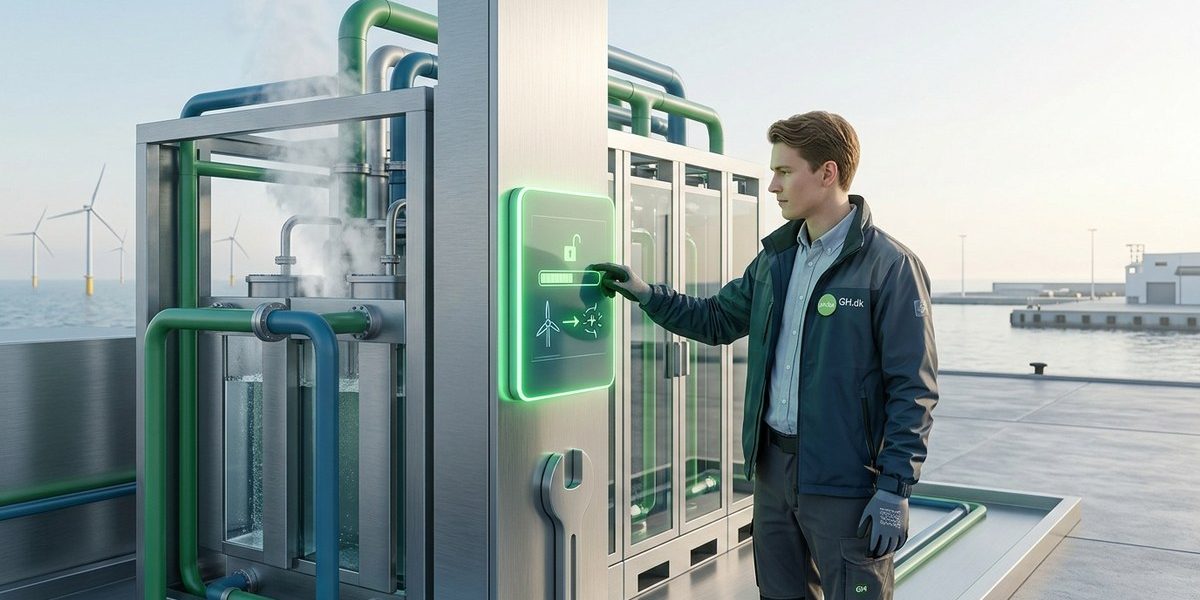
Denmark is establishing itself as a frontrunner in the race to develop a sustainable energy future. At the heart of this transformation lies the deployment of cutting-edge green hydrogen electrolysers. These systems convert renewable energy into green hydrogen, offering a versatile fuel source that can power industries, transport, and even heating. As Denmark ramps up its efforts, understanding the technological and strategic developments in its electrolyser deployment becomes essential for industry professionals, policymakers, and researchers alike.
Denmark is making significant strides in green hydrogen by deploying advanced electrolysers that leverage renewable energy, positioning itself as a leader in sustainable energy innovation for 2026 and beyond.
Denmark’s push towards green hydrogen infrastructure
Denmark’s commitment to becoming carbon neutral by 2050 hinges on its ability to produce and utilise green hydrogen efficiently. The country’s abundant wind power offers a renewable backbone for electrolyser operations. By integrating large-scale electrolysers into its energy system, Denmark aims to supply clean hydrogen across various sectors, reducing reliance on fossil fuels and achieving a more sustainable economy.
Investments in infrastructure are complemented by strategic partnerships with industry leaders and research institutions. These collaborations focus on developing scalable electrolyser technologies that can operate reliably under Denmark’s specific conditions. The government’s supportive policies and funding schemes further accelerate deployment, making Denmark a testbed for advanced electrolyser systems.
Key components and innovations in Denmark’s electrolyser deployment
Denmark’s electrolysers are distinguished by their technological sophistication and adaptability. They typically feature high-efficiency membranes, durable catalysts, and smart control systems. These enhancements optimise hydrogen production rates while minimising energy consumption.
Recent innovations focus on increasing the size and scale of electrolysers. For instance, Denmark has pioneered the use of modular systems that can be expanded as demand grows. This flexibility allows for incremental investments and reduces project risks. Additionally, integration with renewable energy sources like wind farms ensures that hydrogen production remains green and cost-effective.
How Denmark is scaling up its electrolyser capacity
Scaling up involves several practical steps that are vital for realising Denmark’s green hydrogen ambitions:
- Site selection and grid integration: Choosing locations close to renewable energy sources and grid connections minimises transmission losses and infrastructure costs.
- Standardisation and modular design: Employing standardised electrolysers that can be combined into larger units simplifies manufacturing and maintenance.
- Grid stabilisation and energy storage: Incorporating energy storage solutions ensures continuous operation even when renewable generation fluctuates.
- Policy support and funding: Securing government grants and incentives encourages private sector investment.
- Industry collaboration: Partnering with energy companies and technology providers accelerates deployment and knowledge sharing.
Practical processes for developing Denmark’s green hydrogen infrastructure
Implementing Denmark’s electrolysis projects involves a series of well-planned steps:
- Assess local renewable energy potential: Conduct detailed resource mapping to identify optimal sites with high wind or solar capacity.
- Design and select electrolysis technology: Choose systems that match project scale, efficiency requirements, and operational conditions.
- Secure permits and funding: Navigate regulatory frameworks and apply for grants from government bodies or EU programmes.
- Build infrastructure: Develop the necessary facilities, including water supply, power connections, and hydrogen storage.
- Commission and optimise: Start operations with close monitoring to fine-tune performance and maximise output.
- Integrate into the energy system: Connect hydrogen production with existing industries, transport networks, and export channels.
Challenges and opportunities in Denmark’s hydrogen journey
While Denmark’s plans are ambitious, several hurdles remain:
| Techniques | Mistakes |
|---|---|
| Use high-efficiency membrane electrolysers | Underestimating renewable energy variability |
| Prioritise modular, scalable designs | Overlooking water sourcing and quality |
| Invest in grid stabilisation | Ignoring maintenance and lifecycle costs |
| Develop strong industry partnerships | Failing to align policy and market incentives |
Industry experts emphasise that continuous innovation and collaboration are vital. As one Danish renewable energy executive notes, “Deploying reliable, large-scale electrolysers that can adapt to fluctuating renewable inputs is critical for the success of our green hydrogen economy.”
The strategic importance of advanced electrolysers
Denmark’s focus on deploying advanced electrolysers aligns with its broader strategy to lead the energy transition. These systems enable the country to harness wind and solar power more effectively, converting excess renewable energy into a storable and transportable form. This flexibility supports grid balancing and opens new markets for green hydrogen exports.
Moreover, Danish electrolyser technology is often at the forefront of global innovation. The country’s research institutions and industry are pioneering developments in durability, efficiency, and cost reduction, making green hydrogen more accessible and economically viable.
The future outlook for Denmark’s hydrogen sector
Looking ahead, Denmark’s electrolysis deployment is expected to grow significantly. As project scales expand, the country will refine its techniques, reduce costs, and enhance system resilience. The integration of digital control systems and artificial intelligence will further optimise hydrogen production and distribution.
In addition, Denmark’s collaborative approach is fostering a global ecosystem of innovation. The country’s experience serves as a model for other nations aiming to develop their green hydrogen economies.
Final thoughts on Denmark’s hydrogen path
Denmark’s strategic deployment of advanced electrolysers demonstrates how technological innovation, policy support, and industry collaboration can unlock a nation’s renewable energy potential. By prioritising scalable, efficient systems, Denmark is laying the groundwork for a sustainable, hydrogen-powered future.
If you are involved in energy projects, consider how adopting similar approaches can accelerate your own transition efforts. Building on Denmark’s success can help ensure a resilient, low-carbon energy landscape for 2026 and beyond.