Denmark has some of the most ambitious green hydrogen targets in Europe. By 2030, the country aims to have several gigawatts of electrolyser capacity installed. The wind blows hard, the policy support is strong, and the industrial appetite for green hydrogen is growing. Yet anyone working on an electrolyser project in Denmark knows that the path from announcement to energisation is rarely straight.
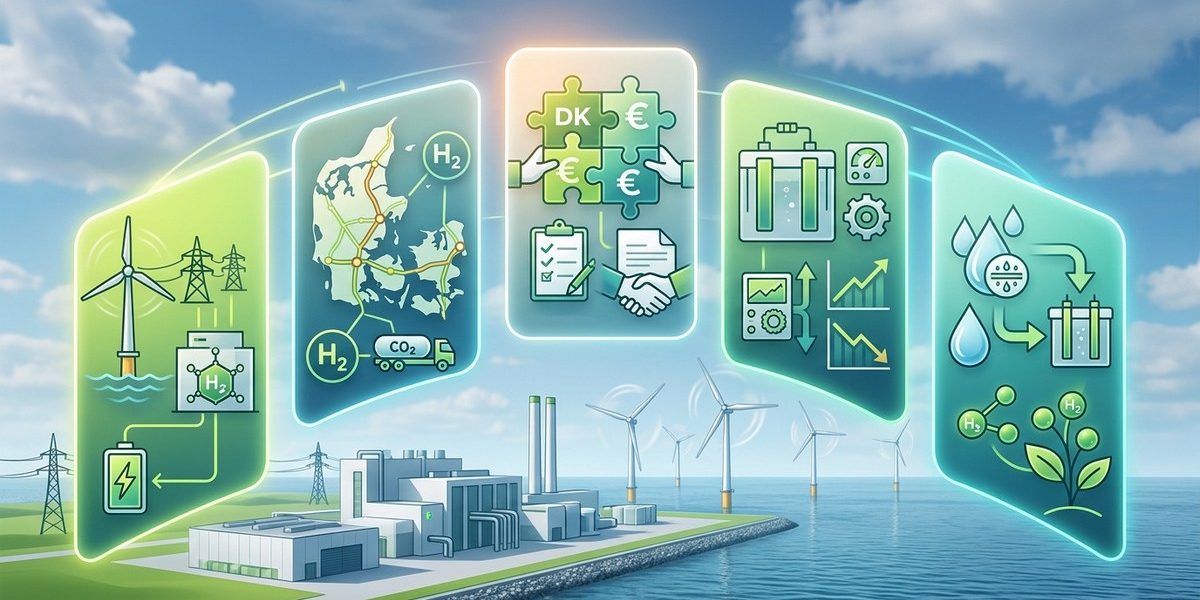
Denmark’s electrolyser rollout faces five major barriers: grid connection costs, intermittent renewable supply, slow permitting, material supply bottlenecks, and uncertain off take agreements. Each challenge has practical solutions that are already being tested in Danish projects. Understanding these obstacles and how to address them is essential for developers, investors, and policy analysts targeting a 2026 timeline.
Five Core Challenges and Their Solutions
Let us walk through the main obstacles that slow down electrolyser deployment in Denmark. For each one, we look at why it happens and what works in practice.
1. Grid Connection Bottlenecks and High Tariffs
A large electrolyser needs a steady or flexible electricity supply. Denmark’s grid is robust, but connecting a multi megawatt plant to the transmission network can take years. Queue times for grid studies in certain parts of Jutland have stretched beyond twelve months. On top of that, grid tariffs for industrial consumers remain high, which eats into the economics of green hydrogen production.
What is working:
- Some Danish projects now co locate electrolysers directly with wind farms to bypass transmission queues.
- The Danish Energy Agency has piloted a “fast track” connection process for Power to X plants under 50 MW.
- New tariff structures for flexible consumers that reduce charges during off peak hours are under consultation in 2026.
Developers should budget for at least 18 months of grid connection lead time and consider hybrid models that combine on site renewables with grid backup.
2. Matching Intermittent Renewables with Electrolyser Operation
Wind power is wonderfully cheap in Denmark, but it does not blow on a schedule. Electrolysers that run on variable power face lower utilisation rates, which pushes up the levelised cost of hydrogen. A PEM electrolyser can ramp up and down quickly, but alkaline units are more sensitive to cycling.
How Denmark is solving this:
- Many operators use a hybrid approach: run the electrolyser at base load with grid power and use surplus wind when available.
- New “hydrogen ready” PPAs (power purchase agreements) are being designed that include flexibility clauses and shared balancing costs.
- Projects in the Green Hydrogen Denmark network use real time forecasting to schedule production.
| Approach | Pros | Cons |
|---|---|---|
| Co location with wind farm | Low electricity cost, no grid fees | Lower utilisation, needs oversized stack |
| Grid connected with flexible tariff | Higher utilisation, stable output | Higher electricity cost, complex tariff negotiation |
| Hybrid (wind + grid + battery) | Best balance of cost and reliability | Higher capital expenditure, more controls needed |
A growing number of developers prefer the hybrid route because it gives them control over both uptime and power cost.
3. Slow Permitting and Environmental Approvals
Denmark is known for efficient administrations, but environmental impact assessments (EIAs) for large electrolysis plants can still take 18 to 24 months. Local municipalities sometimes raise concerns about water use, noise, or safety buffers. The result is project delays that frustrate investors.
Steps to speed up the process:
- Engage with the municipality and the Danish Environmental Protection Agency at the feasibility stage, not after the site is chosen.
- Pre order EIA studies for water availability and Natura 2000 impacts before you file the formal application.
- Use standardised plant designs that have already passed EIA in another Danish region.
- Join industry working groups that feed into the Danish Energy Agency’s ongoing regulatory simplification efforts.
“The best piece of advice I give to new developers is to treat the permitting phase as a parallel work stream alongside grid and financing. Do not wait for one to finish before starting the next.” — Henrik Larsen, project director at a Danish PtX developer
4. Supply Chain Constraints for Critical Materials
Electrolysers depend on materials like iridium for PEM membranes and nickel for alkaline stacks. Global supply chains are still tight, and lead times for certain components have been reported at 12 to 18 months. Danish projects that order stacks early secure better pricing and delivery slots.
Practical measures to reduce risk:
- Secure frame agreements with two or more electrolyser manufacturers to avoid single source dependency.
- Consider alkaline technology if your project can tolerate lower current density, because it uses more abundant materials.
- Track the EU’s Critical Raw Materials Act, which aims to boost European production of iridium alternatives by 2027.
- For PEM projects, recycled iridium catalysts are becoming commercially available in 2026, which cuts cost and supply risk.
Denmark’s position as a logistics hub in northern Europe helps, but early ordering remains the most reliable hedge.
5. Off Take Uncertainty and Hydrogen Price Volatility
Even if you build the electrolyser, who will buy the green hydrogen? The offtake market is still developing. Large industrial consumers like refineries and fertiliser plants in Denmark are signing contracts, but smaller operators hesitate. The price of hydrogen fluctuates with electricity costs, and long term fixed price contracts are rare.
How the market is evolving:
- The Danish government launched a Contracts for Difference (CfD) scheme in 2025 that covers the gap between production cost and market price. A second auction round is expected later in 2026.
- Several industrial clusters in the Copenhagen and Esbjerg areas are pooling demand through Power to Gas systems for sustainable Danish industry.
- Developers that offer flexible hydrogen supply contracts (with volume and price adjustments linked to the day ahead power price) are attracting more buyers.
| Off take model | Description | Best for |
|---|---|---|
| Fixed price PPA | Long term contract with floor price | Large industrial buyers |
| CfD with government | Variable subsidy tops up market price | Projects with high capital costs |
| Merchant / spot | Sell hydrogen on open market | Flexible projects with low cost production |
A diversified offtake strategy that mixes CfD support, bilateral PPAs, and some spot exposure is becoming standard for Danish projects.
Moving Past the Hurdles
Denmark is not waiting for perfect conditions. Pilot projects in Fredericia, Copenhagen, and Aalborg are demonstrating that these barriers can be overcome. The key is to treat each challenge as a design parameter rather than a showstopper.
For developers, the lesson is clear: start grid studies early, engage with regulators before you submit, and secure stack supply agreements at the same time as your financing. For policy analysts, the focus should remain on tariff reform and streamlined permitting, because those are the areas where Denmark can differentiate itself from other European markets.
If you are working on a Danish electrolyser project, you can find more guidance on selecting the right electrolysis system for your site and on integrating your plant with Denmark’s world class wind power.
Turning Barriers into Breakthroughs
The five challenges we covered — grid costs, intermittent supply, permitting delays, material shortages, and uncertain offtake — are real, but they are also solvable. Denmark has the institutional know how, the renewable resources, and the political will to lead Europe in electrolyser deployment. What it needs now is smart project execution that anticipates these problems rather than reacts to them.
Whether you are analysing policy, developing a project, or investing capital, you can take confidence from the fact that every barrier has a workaround that has already been tested somewhere in the Danish landscape. The green hydrogen future is not just possible; it is being built right now, one electrolyser at a time.