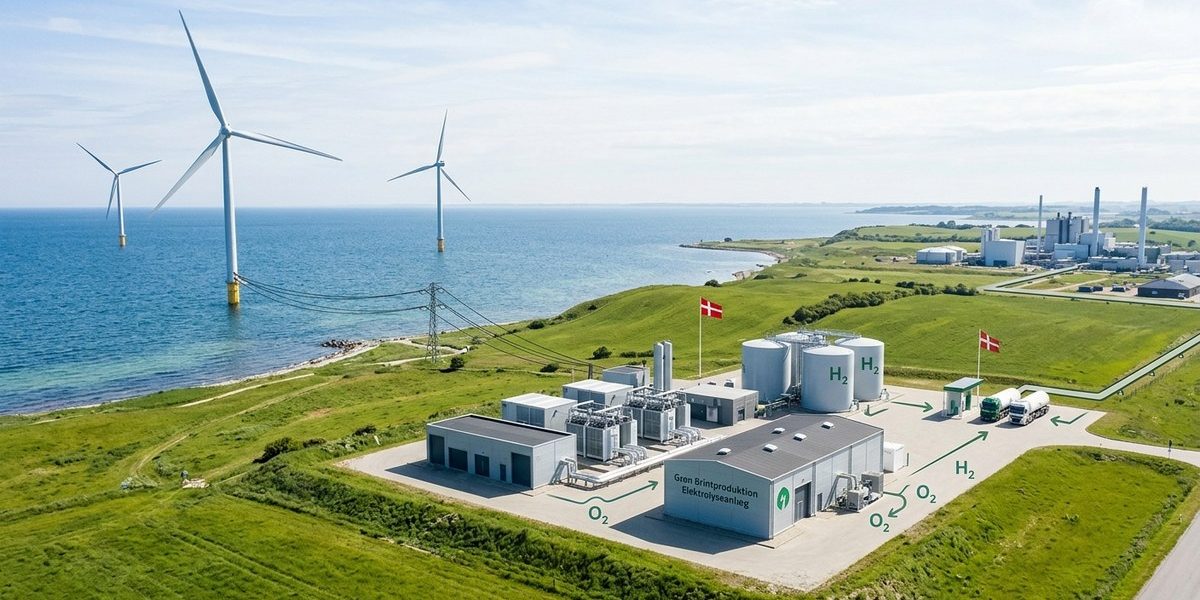
Denmark’s wind turbines generate some of the cheapest electricity in Europe. But that power is not always needed when the wind blows strongest. The solution? Turn it into green hydrogen. Coupling electrolysers directly with wind power allows Denmark to store renewable energy as a flexible fuel. This process helps balance the grid and opens new routes for industrial decarbonisation. For energy professionals and policy analysts, understanding how to integrate these systems is key to scaling up production. Let’s look at the technical side of Denmark wind power electrolyser green hydrogen integration.
This practical guide explains how to integrate electrolysers with Denmark’s wind power for optimal green hydrogen production. It covers the technical challenges of variable wind energy, practical steps for coupling electrolyser systems with wind farms, and common pitfalls to avoid during deployment. Energy professionals, researchers, and policy analysts will find actionable insights on optimising electrolyser operation, managing grid interactions, and scaling up production to meet Denmark’s ambitious 2026 green hydrogen targets for industrial decarbonisation.
Why Denmark Is a Natural Laboratory for Wind to Hydrogen Integration
Denmark has spent decades perfecting wind energy. By 2026, wind power supplies more than half of the country’s electricity. That share will grow as new offshore farms come online. The challenge is not generating power. It is using every megawatt hour when the wind is strong and the grid is full.
Electrolysers offer a way out. They take surplus electricity and split water into hydrogen and oxygen. The hydrogen can be stored, shipped, or burned later. This turns a grid balancing problem into a commercial opportunity.
The Danish government has set clear targets. By 2030, the country aims for 4 to 6 gigawatts of electrolyser capacity. That is a massive jump from today’s numbers. Meeting that goal depends on one thing: getting the integration between wind turbines and electrolysers right.
For a deeper look at the national strategy, read our article on how Denmark is leading the transition to green hydrogen infrastructure.
The Technical Challenge of Coupling Electrolysers with Wind Power
Wind power is variable. One hour the turbines run at full capacity. The next hour they barely turn. Electrolysers prefer stable, continuous operation. That mismatch creates the central engineering challenge.
Three factors matter most:
- Power quality. Electrolysers need a steady voltage and current. Wind turbines produce fluctuating output. Power electronics must smooth the supply.
- Load flexibility. Modern electrolysers can ramp up and down. But not infinitely. Each technology has limits on how fast it can respond to changes in wind speed.
- System sizing. If you size the electrolyser for average wind output, you leave capacity idle during peak wind. If you size for peak output, the electrolyser runs below capacity most of the time.
Getting the balance right requires careful modelling of wind patterns, electrolyser performance, and hydrogen demand.
The Danish approach uses a mix of onshore and offshore wind farms. Each site has a different wind profile. By connecting electrolysers to multiple farms, operators can smooth the overall power supply. This is one of the top innovations in Danish electrolyser technologies for 2026.
A Practical Step by Step Approach to Integration
Here is a structured method for coupling electrolysers with wind power in the Danish context. These steps apply whether you are planning a new installation or retrofitting an existing wind farm.
-
Analyse the wind resource profile for your site. Collect at least two years of data at ten minute intervals. Look for seasonal patterns, daily cycles, and extreme events. This data will drive your electrolyser sizing decisions.
-
Choose the right electrolyser technology for variable input. Proton exchange membrane (PEM) electrolysers handle ramping better than alkaline systems. Solid oxide electrolysers offer higher efficiency but need more stable heat. Match the technology to your wind profile.
-
Design the power electronics interface. Include rectifiers, transformers, and control systems that can handle rapid swings in voltage. Add a small battery buffer if the grid connection is weak. This protects the electrolyser stacks from damage.
-
Set up a real time control system. The controller must decide when to send power to the electrolyser and when to sell it to the grid. Use a price signal and a wind forecast as inputs. A good controller can improve project economics by 15 to 20 percent.
-
Plan for hydrogen storage and off take. Electrolysers produce hydrogen continuously, but demand may be intermittent. Install pressurised storage tanks sized for at least 24 hours of production. Secure an off take agreement before you start construction.
-
Monitor and optimise performance over time. Track stack degradation, energy consumption, and hydrogen purity. Use this data to adjust your operating strategy. Small tweaks can extend stack life by thousands of hours.
Denmark has several demonstration projects that validate this approach. The maximizing green hydrogen production with Danish electrolyser technologies page shows real world results from these installations.
Common Missteps and How to Avoid Them
Even well designed projects can stumble. The table below shows frequent mistakes and the better approach used by successful Danish operators.
| Common Mistake | Better Approach |
|---|---|
| Sizing the electrolyser for peak wind output without considering downtime | Size for average wind, then add a small buffer. Accept that the electrolyser will idle during low wind periods. |
| Using a single grid connection point for both power import and export | Install separate connections for the wind farm, the electrolyser, and the grid. This gives more flexibility in operations. |
| Neglecting thermal management in the electrolyser design | Danish winters are cold. Use waste heat from the electrolyser to preheat incoming water and maintain stack temperature. |
| Signing a fixed price power purchase agreement (PPA) | Use a hybrid PPA that tracks the day ahead spot price. This lets the electrolyser run when power is cheapest. |
| Overlooking hydrogen purity requirements for end users | Check the purity needs of your off taker before choosing the electrolyser. Some applications need 99.999 percent hydrogen. |
Each of these missteps has cost real projects time and money. The Danish projects that succeed share a common trait: they treat the electrolyser as a system component, not a standalone machine.
For more detail on selecting the right hardware, see our guide on key factors for choosing electrolyzer technology in Denmark’s green hydrogen sector.
Expert Advice on System Optimisation
“The biggest mistake we see is treating the electrolyser like a factory that runs 24/7. In the Danish wind system, you need to think of it as a flexible load that follows the wind. That means accepting lower utilisation rates in exchange for much lower electricity costs. The economics work if you design for the system, not for the machine.” – Lead engineer at a Danish power to gas research centre, 2026
This advice matches what operators have learned in the field. A 100 megawatt electrolyser that runs 4000 hours per year at very low electricity cost can produce cheaper hydrogen than a 50 megawatt electrolyser that runs 8000 hours per year at a higher cost.
The key metric is the levelised cost of hydrogen (LCOH). It depends mostly on three variables: electricity price, stack efficiency, and capital cost. In Denmark, with wind power often below 20 euros per megawatt hour, the electricity price dominates the equation.
That is why flexible operation matters so much. By running only when wind power is abundant and cheap, the electrolyser achieves an average electricity cost far below the grid average. This is the core insight behind Denmark wind power electrolyser green hydrogen integration.
What the 2026 Landscape Looks Like for Danish Green Hydrogen
Denmark’s pipeline of green hydrogen projects has grown significantly by 2026. Several large scale electrolyser plants are under construction near major wind farms. The HySynergy project in Fredericia and the GreenLab facility in Skive are leading examples. Both use direct connections to nearby wind turbines.
The Danish Energy Agency now publishes a monthly electrolyser utilisation report. It shows that well integrated plants achieve utilisation rates of 45 to 60 percent when paired directly with wind. Plants that rely solely on grid power see lower rates because they pay higher electricity costs and run fewer hours.
Offshore integration is the next frontier. Several developers are planning floating electrolyser platforms that sit next to offshore wind turbines. These systems avoid the cost of bringing electricity to shore. Instead, they send hydrogen through a pipeline. The first pilot projects are expected online by 2028.
For a broader view of the infrastructure being built, read our article on exploring Denmark’s role in advancing green hydrogen infrastructure by 2026.
Making the Numbers Work for Your Project
Project developers need a clear financial model before they commit capital. Here are the key inputs for a Danish wind to hydrogen project in 2026.
Electricity cost assumptions. Use historical wind power prices from the Nord Pool market. In 2025, the average onshore wind PPA price was around 22 euros per megawatt hour. Offshore wind was slightly higher at 28 euros. Expect these numbers to stay stable or fall slightly as new turbine technology improves capacity factors.
Electrolyser capital costs. PEM electrolyser systems now cost around 700 euros per kilowatt for large installations. Alkaline systems are cheaper at 500 euros per kilowatt but have lower efficiency and slower ramping. Prices have fallen by about 40 percent since 2022 and continue to drop.
Stack lifetime. Modern PEM stacks last 60,000 to 80,000 hours before needing replacement. That is roughly 8 to 10 years of operation at 50 percent utilisation. Replacement stacks cost about 20 percent of the original system price.
Hydrogen selling price. Industrial off takers in Denmark currently pay between 5 and 7 euros per kilogram for green hydrogen. The EU carbon price and the Danish hydrogen subsidy scheme help bridge the gap with grey hydrogen.
Plug these numbers into a simple discounted cash flow model. For a 100 megawatt electrolyser running 5000 hours per year, the internal rate of return ranges from 6 to 10 percent depending on the exact assumptions. That is attractive enough for institutional investors.
Our page on future-proofing Denmark’s electrolyser infrastructure for 2026 and beyond includes a downloadable financial model template.
A Final Word on Wind and Hydrogen Working Together
The integration of electrolysers with Denmark’s wind power is not just a technical exercise. It is the foundation for a new energy economy. When the wind blows, the electrolysers run. When it stops, the hydrogen flows. That simple rhythm replaces fossil fuels across transport, industry, and heating.
Denmark has the wind resource, the grid infrastructure, and the policy support to make this work. The missing piece now is project execution. Every new electrolyser plant teaches us something about how to improve the next one.
If you are planning a project or advising on one, start with the wind data. Size the system for the real world, not the brochure. Build flexibility into every component. And remember that the goal is not to run the electrolyser all the time. The goal is to run it when it makes economic and environmental sense.
That is the Danish way. And it is working.