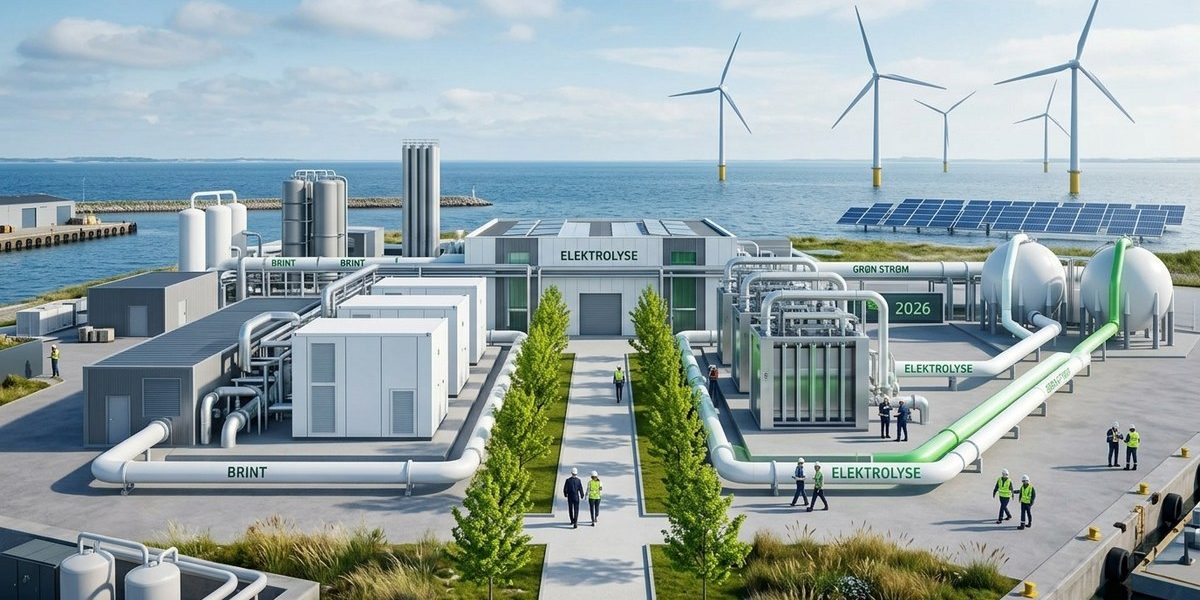
Denmark’s green hydrogen sector is moving at a pace that few predicted. By 2026, the country has become a living laboratory for electrolyser deployment at scale, and the numbers are striking. With ambitious Power-to-X targets and a wave of new manufacturing capacity coming online, Denmark is not just talking about the hydrogen economy. It is building it, one megawatt at a time. For energy professionals, policy analysts, and investors tracking the space, this is the moment to pay close attention.
Denmark’s electrolyser push in 2026 is driven by bold policy targets, falling technology costs, and a surge in industrial demand for green hydrogen. With 4 to 6 GW of Power to X capacity planned by 2030, Danish projects are setting new benchmarks for efficiency and scale. This acceleration is reshaping the global hydrogen landscape and creating real opportunities for investors, engineers, and energy professionals who want to be part of this transition. The momentum is now building very strongly.
The Policy Engine Behind the Acceleration
Denmark did not arrive at this point by accident. A sustained policy framework has been the backbone of the country’s electrolyser push. In 2026, that framework is generating tangible results.
The Danish government’s Power to X strategy, first outlined in 2021 and updated several times since, set a target of 4 to 6 GW of electrolyser capacity by 2030. That number once seemed aspirational. Today it looks achievable, and some analysts believe Denmark could exceed it. The strategy includes direct subsidies for green hydrogen production, carbon contracts for difference that reduce investor risk, and a dedicated hydrogen infrastructure fund.
What makes the Danish approach different is how it connects policy to practice. There are no vague promises. Projects are being built, permits are being issued, and the first wave of industrial scale electrolysers is already operating. This creates a feedback loop. Each successful installation reduces costs for the next one, and each policy adjustment reflects lessons learned on the ground.
For investors, this predictability is gold. When you know the regulatory direction will not shift with every election, you can commit capital with confidence. That is exactly what is happening in 2026.
How Electrolyser Technology Is Maturing in 2026
The technology itself is evolving at a remarkable rate. Five years ago, a 10 MW electrolyser was considered large. In 2026, projects of 100 MW and beyond are the new normal. Manufacturers are scaling up production lines, and the cost per megawatt is falling.
The Three Technologies Competing for Dominance
Denmark is not putting all its eggs in one basket. Three main electrolyser technologies are being deployed across the country, each with distinct strengths.
| Technology | Efficiency Range | Best Use Case | Key Limitation |
|---|---|---|---|
| PEM (Proton Exchange Membrane) | 60 to 70 percent | Dynamic operation with wind power | Higher capital cost per MW |
| Alkaline (Traditional) | 65 to 75 percent | Steady state industrial production | Slower response to grid fluctuations |
| SOEC (Solid Oxide) | 75 to 85 percent | High temperature industrial processes | Still early in commercial deployment |
Each technology has found its niche. PEM electrolysers are the go to choice for projects that need to ramp up and down alongside Denmark’s wind turbines. Alkaline systems dominate in settings where constant production is the priority. SOEC units, while still in the early commercial phase, are attracting serious interest from industries that produce high temperature heat as a byproduct.
What matters most in 2026 is that all three are getting cheaper. Manufacturing volumes are rising, supply chains are maturing, and Danish engineers are finding ways to squeeze more hydrogen out of every kilowatt hour.
Practical Steps for Deployment
If you are planning an electrolyser project in Denmark, the process follows a clear path. Here are the practical steps that successful developers are using this year.
-
Secure a grid connection agreement early. Queue times have grown as demand surges, and the best locations get taken first.
-
Pair your electrolyser with a dedicated renewable energy source. Denmark’s wind farms offer some of the lowest electricity prices in Europe, but only if you structure your power purchase agreement correctly.
-
Apply for certification under the EU’s delegated acts for renewable hydrogen. This is not optional. Without certification, your hydrogen cannot be counted towards the mandated targets that industrial buyers are required to meet.
These steps sound simple on paper. In practice, each one requires careful planning and local knowledge. That is why partnering with Danish engineering firms and project developers can make a significant difference. Many international investors are choosing to work with local teams who understand the regulatory landscape and can navigate the permitting process without delays.
What This Means for Industry and Investors
The acceleration in Denmark’s electrolyser push is creating opportunities across multiple sectors.
For industrial buyers, the availability of domestically produced green hydrogen is improving. Companies in refining, ammonia production, and steelmaking are signing long term offtake agreements that allow them to plan their own decarbonisation roadmaps with confidence. The days of green hydrogen being a theoretical option are over. In 2026, it is a real input that can be procured at scale.
For technology providers, Denmark is a showcase market. A successful installation here is noticed by buyers across Europe and beyond. Several international electrolyser manufacturers have chosen Denmark for their first commercial scale plants, and the data from those projects is helping to drive down costs industry wide.
For investors, the risk profile has improved dramatically. Early projects in Denmark benefited from generous subsidies, but the 2026 landscape is different. Costs have fallen enough that some projects can compete without subsidy, especially when paired with cheap wind power. This shift from subsidy dependence to market viability is attracting a new wave of institutional capital.
If you want a deeper look at how this is playing out across the value chain, the latest innovations in Danish electrolyser technologies for 2026 provide a useful overview of the technical developments driving the market.
Overcoming the Remaining Hurdles
No story of progress is complete without acknowledging the challenges. Denmark’s electrolyser push still faces real obstacles, and being honest about them is the best way to address them.
The first challenge is grid capacity. Denmark’s electricity grid was not designed for the kind of massive power demand that gigawatt scale electrolysis requires. Grid operators are investing heavily in upgrades, but there are bottlenecks, especially in the western part of the country where the best wind resources are located.
The second challenge is water. Electrolysis requires large volumes of demineralised water, and while Denmark has plenty of freshwater, treating it to the required purity level adds cost. Some projects are exploring seawater desalination as an alternative, but that brings its own energy penalty.
The third challenge is the workforce. The rapid growth of the sector has created a shortage of skilled engineers and technicians who understand electrolyser systems. Danish universities are expanding their hydrogen programmes, but it takes time to train the next generation.
Common Pitfalls to Watch For
Based on the experience of projects that have already been built, here are the mistakes that developers most often make.
-
Underestimating the time required for environmental impact assessments. The permitting process in Denmark is thorough, and that is a good thing. But you need to plan for it.
-
Choosing technology based on upfront cost alone. The cheapest electrolyser is not always the most economical over a 20 year operating life. Total cost of ownership matters more.
-
Neglecting the hydrogen storage and compression side of the project. Electrolyser output is only part of the picture. You need a plan for getting the hydrogen to your customer.
-
Failing to engage with local communities early. Danish municipalities are generally supportive of green hydrogen projects, but they expect transparency and consultation.
Avoiding these pitfalls requires experience. That is why many first time developers in Denmark are choosing to partner with firms that have already been through the process. The learning curve is real, but it is also navigable.
Expert Advice for Staying Ahead
I spoke with a senior project manager who has overseen three electrolyser installations in Denmark since 2023. Here is what he had to say about the current state of play.
“The biggest change I have seen in the last three years is the shift in mindset. In 2023, everyone was asking if green hydrogen would work. In 2026, they are asking how to do it at the lowest cost. The technology is proven. The question now is about optimisation, integration, and commercial structure. The teams that succeed are the ones who treat electrolysis as a system challenge, not a component challenge. You cannot just buy a stack and plug it in. You have to think about how it interacts with the grid, with your renewable supply, with your offtake agreements, and with the regulatory framework. That is where the value is created.”
His advice aligns with what we are seeing across the market. Integration is the name of the game in 2026. The companies that understand how to connect all the pieces are the ones capturing the most value.
For a practical guide on how to approach this integration challenge, take a look at how to integrate electrolysers with Denmark’s wind power for optimal green hydrogen production. It covers the technical and commercial considerations that make the difference between a project that works and one that excels.
Denmark’s Role in the Wider European Hydrogen Grid
Denmark’s electrolyser push is not happening in isolation. The country is positioning itself as a major supplier of green hydrogen to the rest of Europe. The planned hydrogen pipeline to Germany, expected to be operational within the next few years, will connect Danish production to the largest industrial market on the continent.
This export orientation changes the economics of electrolyser deployment. Danish projects can target a larger addressable market than domestic demand alone would support. That scale allows for larger electrolyser installations, which benefit from economies of scale.
At the same time, Denmark is collaborating with its Nordic neighbours on shared infrastructure. The Nordic Hydrogen Route, a joint initiative between Denmark, Finland, and Sweden, is exploring how to connect production hubs across the region. This kind of cross border cooperation reduces costs for everyone involved.
For policy analysts watching the European hydrogen market, Denmark is the closest thing to a proof of concept. If the Danish model works, it will be replicated elsewhere. If it hits roadblocks, those lessons will be just as valuable.
The Road Ahead for Denmark Electrolyser 2026
Looking at the rest of 2026 and beyond, the trajectory is clear. More electrolyser capacity will come online. Costs will continue to fall. Industrial demand will grow. The policy framework will remain supportive.
The question is no longer whether Denmark will succeed in building a green hydrogen economy. The question is how large it will become, and how quickly. The answer depends on many factors, including the pace of grid upgrades, the availability of skilled workers, and the evolution of the European carbon market. But the direction of travel is unmistakable.
For energy industry professionals, the time to act is now. The early movers are already capturing advantages that latecomers will find hard to match. Whether you are an investor looking for project opportunities, a policy analyst tracking regulatory developments, or an engineer wanting to work on cutting edge technology, Denmark in 2026 is the place to be.
If you want to understand the full picture of how this acceleration is unfolding, how Denmark’s electrolyser innovations are shaping the future of green hydrogen in 2026 offers a comprehensive look at the trends and projects that are defining this moment.
The hydrogen economy is not coming. It is here. And Denmark is leading the way.