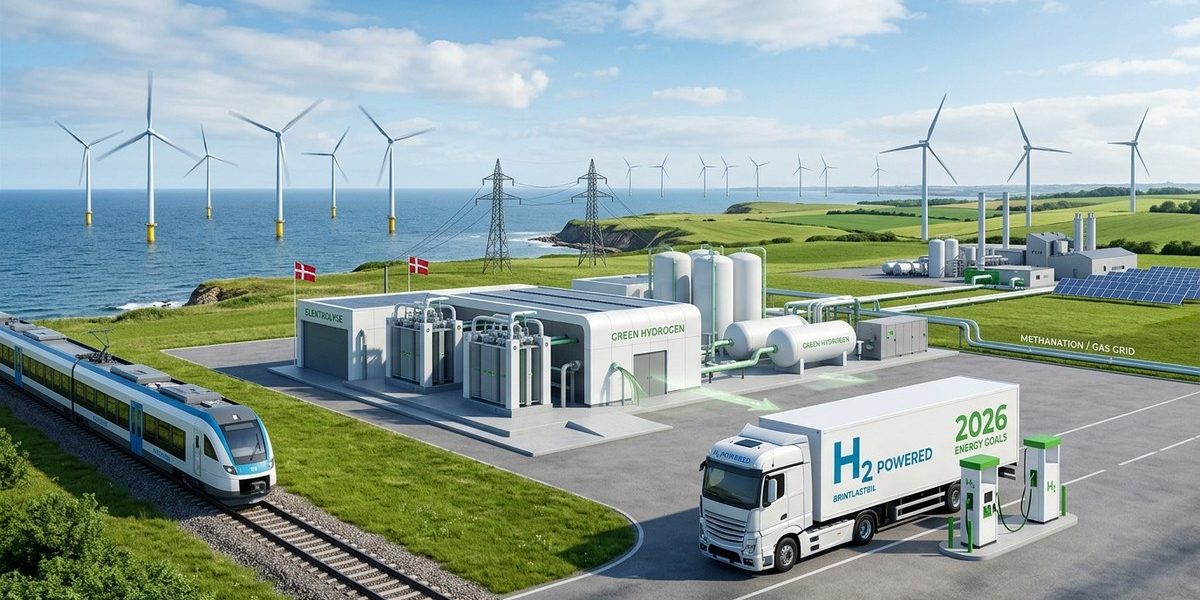
Denmark has set some of the most ambitious green hydrogen targets in Europe, and 2026 is the year when many of those promises turn into tangible results. For energy policy analysts, sustainability researchers, and investors tracking the sector, this is not just another policy milestone. It is a moment when infrastructure decisions, electrolyser deployments, and cross-border partnerships converge to redefine how a nation powers itself. The Danish government has committed to building up to 6 gigawatts of electrolysis capacity by 2030, with significant intermediate targets landing squarely in 2026. That means new production facilities coming online, large-scale industrial offtake agreements taking effect, and a maturing regulatory framework that other countries are watching closely. Understanding why green hydrogen is essential for Denmark’s 2026 energy goals requires looking at the full picture: the technology choices, the policy levers, the industrial applications, and the investment logic that makes this work.
Denmark’s 2026 green hydrogen goals in 2026 represent a transformative shift in how the nation produces and uses energy. With ambitious electrolyser capacity targets and strong policy backing, Denmark is positioning itself as a European leader in renewable hydrogen. This article explains the strategic importance of green hydrogen for meeting Danish climate targets, the key technologies driving progress, and what investors and analysts should watch as the country moves toward energy independence and industrial decarbonisation.
Denmark’s 2026 Green Hydrogen Targets: What Is at Stake
The Danish government has laid out a clear trajectory for green hydrogen. By 2026, the country expects to have multiple large-scale electrolysis plants running, supported by an expanded renewable energy grid and dedicated hydrogen storage infrastructure. These targets are not arbitrary. They align with the European Union’s broader hydrogen strategy and with Denmark’s own commitment to reduce greenhouse gas emissions by 70 percent from 1990 levels by 2030.
For analysts, the key numbers to track are these:
- Electrolyser capacity: Denmark aims for 4 to 6 GW of installed electrolysis capacity by 2030, with the first 1 to 2 GW expected to be operational or under construction by 2026.
- Hydrogen production volume: By 2026, production could reach 200,000 to 300,000 tonnes of green hydrogen per year, mainly for industrial use and heavy transport.
- Cross-border infrastructure: The Denmark-Germany hydrogen pipeline, with an expected capacity of 1 to 2 GW, is slated for a final investment decision by 2026.
- Public-private investment: The Danish government has allocated around DKK 1.25 billion (roughly EUR 168 million) in direct support for hydrogen projects under the Power-to-X strategy, with additional EU funding contributing another EUR 200 million.
These targets place Denmark ahead of most other European nations in terms of concrete deployment. The country already generates more than 50 percent of its electricity from wind and solar, which gives it a natural advantage for producing green hydrogen at scale. But realising the 2026 goals requires coordinated action across technology, policy, and finance.
Why Green Hydrogen Matters for Danish Energy Security
Energy security is not just about keeping the lights on. For Denmark, it is about reducing dependence on imported fossil fuels while creating new export opportunities. Green hydrogen allows the country to store excess wind energy and use it when the wind is not blowing. That flexibility is critical for a grid that relies heavily on variable renewable sources.
Hydrogen also opens the door to decarbonising sectors that electricity alone cannot reach. Heavy industry, shipping, aviation, and large-scale heating all require either high-temperature heat or energy-dense fuels. Green hydrogen and its derivatives, such as ammonia and methanol, can provide both.
“Denmark’s 2026 hydrogen targets are not about building a niche industry. They are about creating a new energy backbone for the country. If we succeed, hydrogen will sit alongside wind and solar as a core pillar of Danish energy supply.” — Danish Energy Agency, 2025 strategy paper
For investors, this creates a clear thesis. Denmark offers one of the most stable regulatory environments for hydrogen in Europe, with a dedicated Power-to-X secretariat, streamlined permitting processes, and a carbon pricing mechanism that favours green production. The country also benefits from strong public support for climate action, which reduces political risk.
To understand the full scope of this transformation, read more about how Denmark is leading the transition to green hydrogen infrastructure. That article covers the practical steps being taken to build out the physical and regulatory framework.
The Four Pillars of Denmark’s Green Hydrogen Strategy
Denmark’s approach to green hydrogen rests on four interconnected pillars. Each one plays a distinct role in achieving the 2026 targets.
-
Electrolyser deployment at scale. The core of the strategy is installing gigawatt-scale electrolysis capacity. Denmark is focusing on two main technologies: alkaline electrolysers, which are mature and cost-effective, and PEM (proton exchange membrane) electrolysers, which offer greater flexibility for coupling with variable wind power. Several projects, including the HØST green ammonia facility and the Kassø Power-to-X plant, are already demonstrating commercial-scale operation.
-
Renewable energy expansion. Green hydrogen is only as clean as the electricity used to make it. Denmark is therefore expanding its wind and solar capacity alongside electrolyser deployment. The country plans to add 4 GW of offshore wind by 2026, much of which will be dedicated to hydrogen production.
-
Industrial offtake and sector coupling. Producing hydrogen is one thing. Using it is another. Denmark is creating demand by connecting hydrogen production to industrial consumers, including refineries, fertiliser manufacturers, and steel producers. The country is also exploring hydrogen for district heating and heavy-duty transport.
-
Cross-border infrastructure and export. Denmark sits at a strategic crossroads between Scandinavian renewable resources and continental European demand. The planned hydrogen pipeline to Germany, along with potential connections to Norway and the Netherlands, positions Denmark as a net exporter of green hydrogen by 2026.
For a closer look at the production side, see our guide on maximizing green hydrogen production with Danish electrolyser technologies. It explains the technical choices that operators face when scaling up.
How Danish Electrolysers Are Driving the 2026 Targets
Electrolyser technology is the engine room of Denmark’s hydrogen strategy. Without efficient, cost-effective electrolysers, the 2026 goals remain out of reach. The good news is that Danish companies and research institutions are making rapid progress in this area.
Here is a comparison of the main electrolyser technologies being deployed in Denmark:
| Technology | Efficiency (kWh/kg H2) | Operational Flexibility | Maturity Level | Typical Scale | Best Use Case |
|---|---|---|---|---|---|
| Alkaline | 50 to 55 | Moderate | Commercial (TRL 9) | 10 to 100 MW | Baseload production with stable power |
| PEM | 50 to 60 | High | Commercial (TRL 8 to 9) | 1 to 50 MW | Dynamic operation with variable renewables |
| Solid Oxide | 37 to 45 | Low | Demonstration (TRL 6 to 7) | 0.1 to 5 MW | High-temperature industrial heat integration |
Each technology has trade-offs. Alkaline electrolysers are cheaper per megawatt but respond slowly to changes in power input. PEM electrolysers cost more but can ramp up and down within seconds, making them ideal for pairing with wind farms. Solid oxide electrolysers offer the highest efficiency but are still at an earlier stage of commercial readiness.
Denmark is pursuing a technology-neutral approach, allowing each project to choose the best fit for its specific conditions. The result is a diverse portfolio of electrolyser installations that collectively de-risk the 2026 targets.
For the latest developments in this area, check out our article on emerging trends in Denmark’s electrolyser technologies for 2026. It covers new innovations that could further reduce costs and improve performance.
Real-World Applications Across Danish Industry
Green hydrogen is not an abstract concept in Denmark. It is already being used in practical applications, and the 2026 goals will accelerate this trend significantly.
- Green ammonia for fertiliser. The HØST project in Esbjerg will produce green ammonia using hydrogen from electrolysis. This replaces fossil-based ammonia and cuts emissions from one of the most carbon-intensive industrial processes.
- Methanol for shipping. The Kassø Power-to-X facility produces green methanol that can be used as a marine fuel. Shipping companies in Denmark and northern Europe are already testing this fuel in commercial vessels.
- Refinery decarbonisation. Oil refineries in Fredericia and Kalundborg are blending green hydrogen into their processes to reduce the carbon intensity of refined fuels.
- Steel manufacturing. Danish steel producers are exploring hydrogen-based direct reduction, a process that could eliminate nearly all emissions from steelmaking.
- District heating. Excess heat from electrolysis is being captured and fed into district heating networks, improving overall system efficiency.
These applications demonstrate that green hydrogen is not a single solution but a versatile energy carrier that can serve multiple sectors. For a deeper analysis of how hydrogen integrates with existing energy systems, read about integrating power-to-gas systems for sustainable Danish industry. That piece covers the technical and economic aspects of sector coupling.
Policy and Investment Landscape
Denmark’s 2026 hydrogen goals are backed by a policy framework that reduces risk for investors and developers. The key mechanisms include:
- Carbon contracts for difference (CCfDs) that guarantee a minimum price for green hydrogen, protecting producers against falling carbon prices.
- Investment subsidies covering up to 40 percent of capital costs for electrolysis projects.
- Streamlined permitting with a one-stop-shop for Power-to-X applications.
- Guarantees of origin for hydrogen, allowing producers to certify the renewable content of their output.
These policies have attracted significant private investment. Major energy companies, including Ørsted, European Energy, and Copenhagen Infrastructure Partners, are actively developing hydrogen projects in Denmark. The total capital expenditure committed to Danish hydrogen projects through 2026 is estimated at more than EUR 3 billion.
For investors assessing the opportunity, the key risk factors to monitor are electricity prices, regulatory alignment with the EU, and competition from other hydrogen-producing regions. Denmark’s advantages include low-cost renewable power, a stable political environment, and proximity to large demand centres in Germany and the Netherlands.
Practical Steps to Support Denmark’s Green Hydrogen Goals
For policy analysts, researchers, and investors who want to engage with Denmark’s hydrogen strategy, here are practical steps to consider:
- Track the tender calendar. The Danish Energy Agency runs regular auctions for hydrogen production subsidies. Knowing the timeline helps you plan investment or research activities.
- Monitor grid connection availability. Electrolysis projects need significant grid capacity. Bottlenecks in grid connections can delay projects, so understanding the queue is essential.
- Study the offtake agreements. The success of hydrogen projects depends on securing long-term buyers. Watch for announcements about corporate power purchase agreements (PPAs) and industrial offtake deals.
- Engage with the regulatory framework. Denmark’s hydrogen rules are still evolving, particularly around storage, transport, and cross-border trade. Staying informed allows you to anticipate changes.
- Assess the technology mix. Different electrolyser technologies offer different risk-return profiles. Understanding which technologies are winning in which applications helps you make better decisions.
These steps apply whether you are evaluating a specific investment, writing a policy brief, or planning a research project. The Danish hydrogen sector is moving fast, and staying informed requires active engagement.
A Strategic Perspective on Denmark’s Green Hydrogen Future
Denmark’s 2026 green hydrogen goals are not a distant ambition. They are being built right now, project by project, policy by policy. For anyone following the energy transition, Denmark offers a real-world case study of how to turn renewable resources into a sustainable hydrogen economy.
The country’s success will depend on execution. Can electrolyser costs continue to fall? Will grid infrastructure keep pace with production? Can industrial demand match the supply that is being built? These are open questions, but the direction is clear.
Denmark has the renewable energy, the industrial base, the policy support, and the political will to make green hydrogen work. The 2026 targets are ambitious, but they are grounded in tangible projects and real investment. For energy policy analysts, sustainability researchers, and investors, this is a moment to pay close attention. The decisions made in Denmark over the next twelve months will shape the European hydrogen landscape for years to come.
To continue your research, explore our comprehensive analysis on how green hydrogen can help Denmark achieve energy independence. It connects the dots between hydrogen production, energy security, and long-term economic resilience.